
POTD Trauma Tuesday! Cordis vs Two 16 Gauge Peripheral IVs

 ·   · 

I encountered the question from an inquisitive junior resident of whether two 16 gauge catheters would infuse blood products more quickly than a single 8.5 Fr cordis during a trauma resuscitation.

A Story Explained by Two Super Soakers

While cars and computers continue to break power records well into the 21st century, did you know the golden age of Super Soakers passed us in the late 90s?

Back then water gun companies sought to create the biggest, most obnoxious, and borderline injurious toys imaginable. As a result some of the most heinous and drenching devices were released that left you soggy and consulting plastics for a skin graft.

Using two of these legendary “toys” (read: weapons of watery destruction), I’m going to highlight a point of flow that applies to trauma.
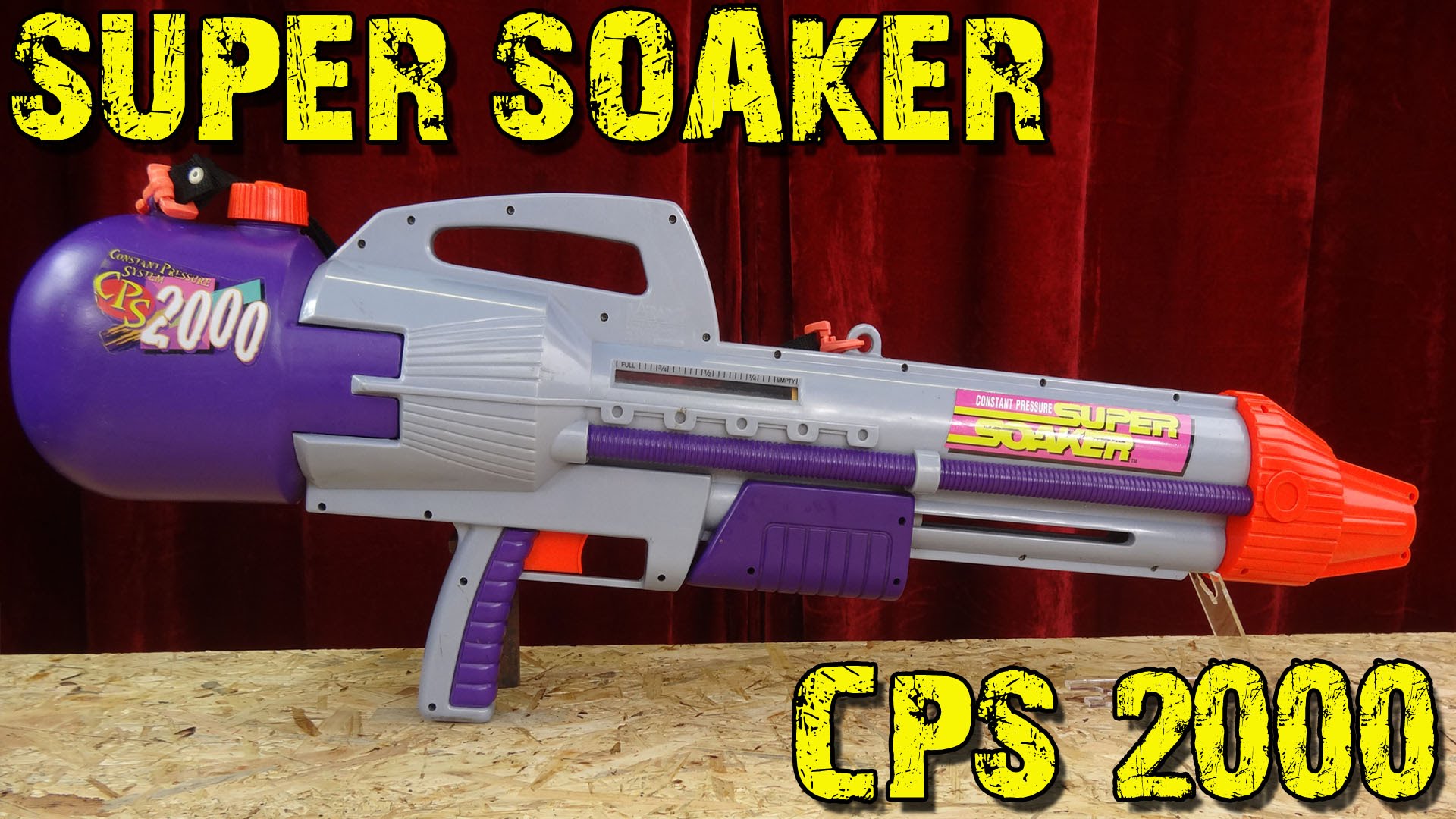
One of the most powerful water guns was the Super Soaker CPS 2000. It was released in 1996 and launched a liter of water approximately 50 feet with a single pull of the trigger. It is vicious in its simplicity. It had a single barrel and would discharge nearly one liter per second. It would be discontinued and replaced after a year or so by weaker versions due to multiple reports of injuries. Worried mothers rejoiced in the streets. Its fastest rate: 849 mL/sec.
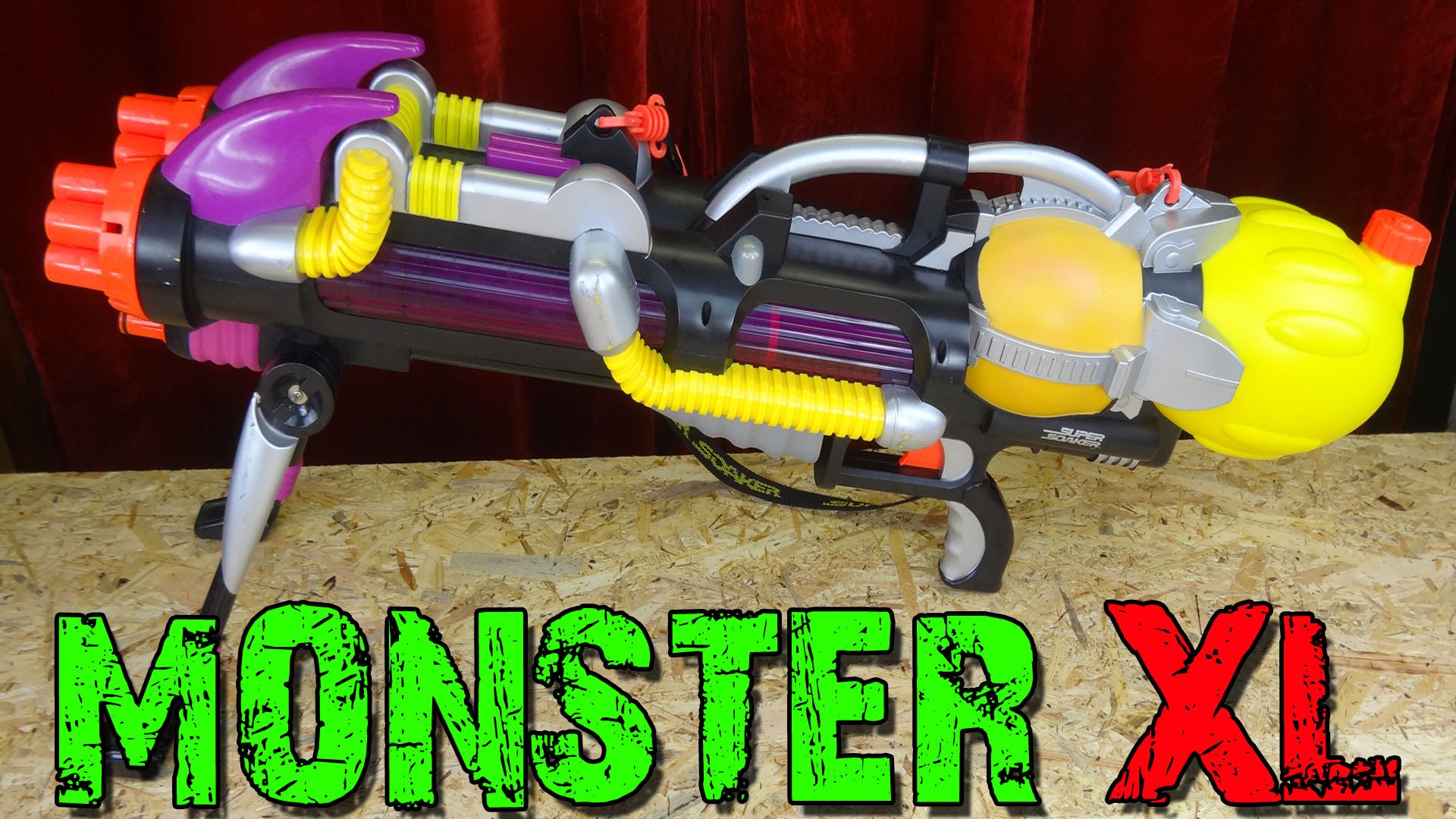
Later on in 2000, the Super Soaker Monster XL was unleashed. It holds a record for being the largest single-piece water blaster and was truly a marvel in 90’s technology. It came with a bipod, a 3.6L tank, and two barrels. The sad news is that though it is bigger and meaner looking, it would take 30 pumps before you would be able to use it adequately and it still did not pack the same punch as the original CPS 2000. Its shear weight alone prepared scores of millennials for the impending burden of student loans and housing debt. Its fastest rate: 591 mL/sec. Perhaps the number of barrels were to blame.
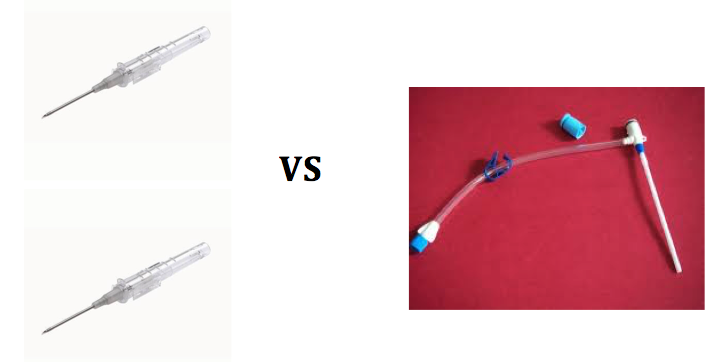
In this contest of two classic water guns, we see why the cordis has a better flow rate than other types of vascular access – say two 16 gauge needles. An ETM test (link below) using a rapid infuser found that a 7 Fr cordis can infuse one liter of fluid in under a minute. It took 46 seconds when a 8.5 Fr cordis was used. At 2.8 mm in diameter, this is approximately a 12 gauge needle in size. The 16 gauge would require two minutes and 20 seconds. Even using two lines that would be 70 seconds assuming the same conditions.
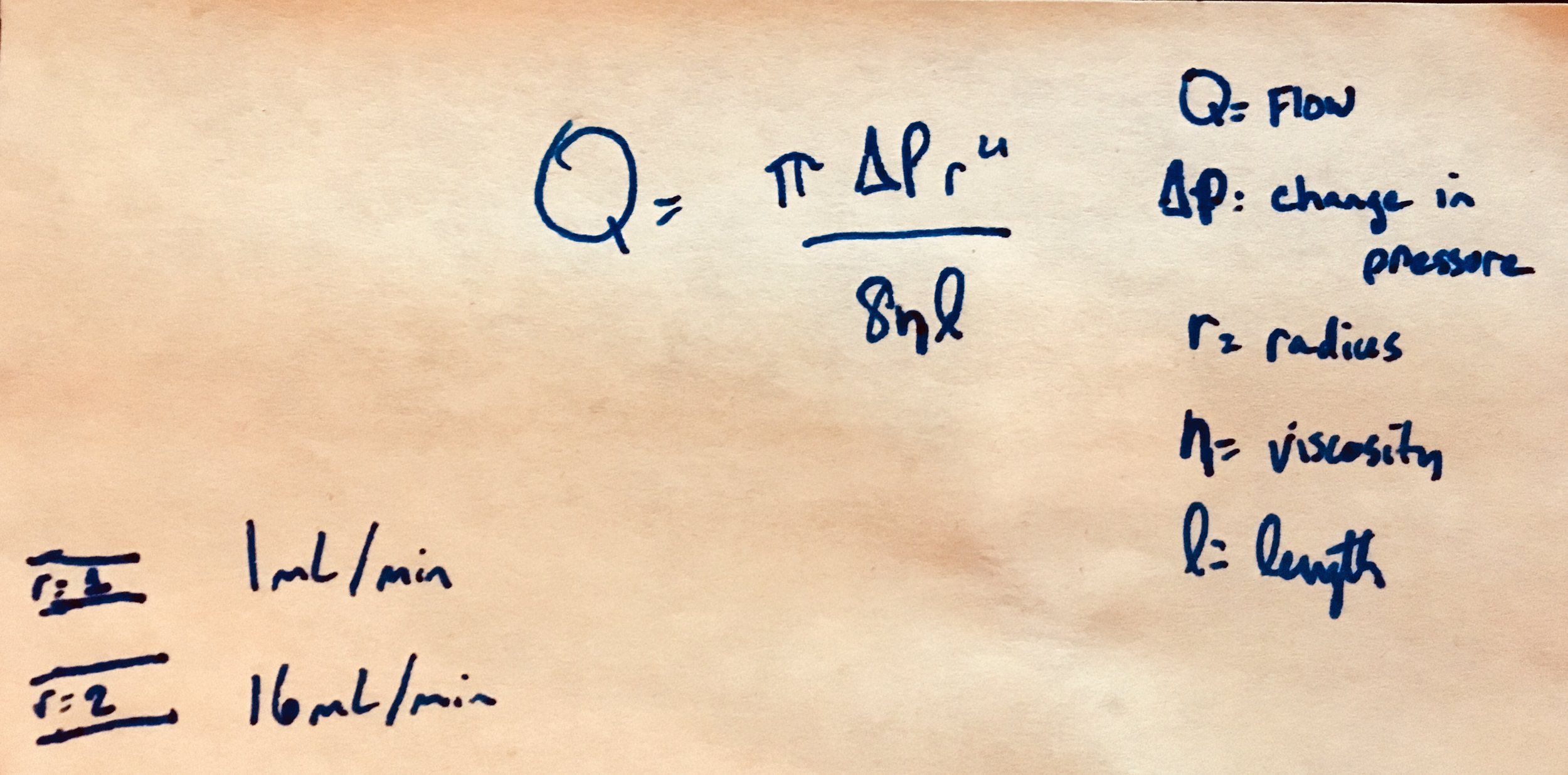
A single 16 gauge has a diameter of 1.2 mm. The difference between it and a 8.5 Fr cordis is 1.6 mm but the effect of the radius on flow is exponentially larger due to Poiseuille’s law.


Though a sufficiently intelligent rapid infuser might even the playing field, I will stick to the cordis.


Well, just to let you know how far we have come in 2018, here is a modern water gun:

Strong work generation Z. At least you still have to go outside to play with this.


Some further reading:

For the direct flow test please see ETM’s showdown: http://etmcourse.com/large-bore-iv-access-showdown/

https://icurounds65.wordpress.com/2013/11/07/venous-access-for-fluid-resuscitation-you-dont-need-a-central-line/

http://emupdates.com/2009/11/25/flow-rates-of-various-vascular-catheters/


POTD: Dexmedetomidine

 ·   · 

Dexmedetomidine

A polysyllabic exercise in typographic errors, dexmedetomidine is a drug more commonly known by its trade name “Precedex.” It was FDA approved in 1999 and has obtained an expanded role in emergency rooms as a generic version has tilted costs downward over the past few years. A 4 mcg/mL manually mixed generic concoction costs about $23 with the trademarked version costing $50. You can have the pre-mixed version for about $50 as well (which appears to be under patent past 2030).

FDA approved indications include sedation for ICU patients that are intubated for less than 24 hours and as a premedication for sedation though the non-FDA uses vary immensely.

It works as an alpha-2 agonist that sedates while providing analgesia through both spinal cord and peripheral antinociception. It works at the locus ceruleus in the medulla to halt transmission of noradrenergic output. This differs from GABA based medications which do not halt sympathetic transmission. Side effects include bradycardia and hypotension. Rapid administration activates alpha 2b receptors and causes vasoconstriction with resultant hypertension/reflex bradycardia. It is metabolized by the liver.

Our case today involves the following head CT of a patient brought to the emergency room unresponsive. They would no longer protect their airway and were subsequently intubated.

Sedating with propofol may be a good idea but what about dexmedetomidine?


Dexmedetomidine is a useful tool in managing patients with increased intracerebral pressure with whom you would like to maintain a salvageable neurologic exam. When sympathetic overdrive is a concern, it provides lysis to that environment creating a more stable environment. It creates a mild decrease in ICP and decreases CNS glutamate/catecholamines. If light levels of sedation are used with precedex, patients will rouse easily and then return to sedation when left alone. They simply aren’t as confused because GABA receptors are not the pharmacologic target.


To use dexmedetomidine you start with a 0.2-0.7 mcg/kg/hr infusion. The bolus should probably be avoided to avoid hemodynamic surprises.


Do you have success employing dexmedetomidine in your ER workflow?


https://www.ncbi.nlm.nih.gov/books/NBK268691/

Goldfrank, L. R., & Flomenbaum, N. (2006). Goldfrank's toxicologic emergencies. New York: McGraw-Hill.

Lee, K. (2018). The neuroICU book. Ch 20

http://www.micromedexsolution.com/

https://lifeinthefastlane.com/ccc/dexmedetomidine/


POTD: Emergency reversal of antiplatelet agents in intracerebral hemorrhage?

Clinical Scenario:  78 yo M with hx of CAD and DM, presents with right sided weakness that started one hour prior to arrival, denies trauma.  He is found to have an intracerebral hemorrhage on CT.  As you go through his medication list, you notice that he is on antiplatelets.  His home health aid at bedside says he takes all his medications daily and at baseline, he ambulates without assistance and feeds himself.  

Question: Do you reverse the antiplatelet agent?


A 2010 clinical review in World of Neurosurgery by Campbell et al says “at present, the literature contains insufficient information to establish any guidelines or treatment recommendations.  In light of this, the current authors have proposed a protocol for antiplatelet reversal in both spontaneous and traumatic acute ICH.”


That same year, Scott Weingart had a podcast with sample reversal guidelines in patients on antiplatelets with traumatic head bleeds, which included DDAVP and 1 donor pack platelets.


In 2013, Martin and Conlon had a Best Available Evidence article in Annals of Emergency Medicine which concluded that “there are no compelling data currently supporting the use of platelet transfusion in the management of patients with spontaneous or traumatic intracerebral hemorrhage who are receiving antiplatelet medications.  It would be within the standard of care to withhold platelet transfusion in patients with either spontaneous or traumatic intracerebral hemorrhage who are receiving antiplatelet therapy.”


In 2016, the PATCH trial by Baharoglu et al was published.  It was a randomized multicenter trial where 190 patients who were on antiplatelet therapy with nontraumatic intracerebral hemorrhage were either placed in standard care or standard care with platelet transfusion groups.  The authors’ conclusion was that “platelet transfusion seems inferior to standard care for people taking antiplatelet therapy before intracerebral hemorrhage.  Platelet transfusion cannot be recommended for this indication in clinical practice.”


Take home point:  It is within standard of care to withhold platelets from these patients and a recent randomized trial showed potential harm with platelet transfusion in atraumatic intracerebral hemorrhage.


Want to read more?

http://www.annemergmed.com/article/S0196-0644(12)00295-8/abstract

https://emcrit.org/racc/reversal-head-bleeds/

http://www.emdocs.net/platelets-ddavp-management-intracranial-hemorrhage/

http://rebelem.com/patch-trial-hold-platelets-spontaneous-intracerebral-hemorrhage/

http://www.thelancet.com/journals/lancet/article/PIIS0140-6736(16)30392-0/abstract

http://thesgem.com/2017/06/sgem182-platelet-transfusions-for-intracerebral-hemorrhage-patch-dont-do-it/

http://www.worldneurosurgery.org/article/S1878-8750(10)00232-9/fulltext

 ·