5th metatarsal fracture

5MT.jpg

Normal Apophysis in children runs parallel to the bone.  


Dancer’s or Avulsion (pseudo-Jones) Fracture @ cuboid articulation - hard sole shoe for 4-6 weeks and weight bearing as tolerated (WBAT) with orthopedics follow up in a week

Jones Fracture @ intermetatarsal articulation - high risk of non union, pt will need a splint and non weigth bearing activity (NWB) for 6-8 weeks with orthopedics follow up


Metatarsal shaft fracture - high risk of non union, will need a splint, NWB for 10-20 weeks, with orthopedics follow up

Below is a 5 minute video by amazing Dr. Anna Pickens (former Maimo attending) for visual review of the fractures:


http://www.emdocs.net/em-in-5-5th-metatarsal-fractures/

https://youtu.be/4k1dvPdpW4E


What kind of mood elevator are you on?

SATS.jpg

Lithium toxicity


Background:

Uses: Lithium often prescribed for Bipolar disorder

Has a narrow therapeutic index: therapeutic dose close to a toxic dose

Mechanism of action is still incompletely understood. Lithium increases serotonin release and receptor sensitivity as well as inhibiting release of dopamine and norepinephrine. 

Elimination: Lithium is excreted exclusively by the kidneys. Any insult to kidneys can lead to impaired elimination 


Causes:

For acute overdose mainly intentional overdose

For chronic Li+ toxicity with present body stores any changes changes in absorption or elimination lead to lithium levels above the narrow therapeutic window like:

  • volume depletion

  • salt restriction

  • advanced age with resultant decrease in GFR, 

  • thiazide diuretics, NSAIDs, ACE inhibitors

  • heart failure


Workup at the ED:

  • Basic labs: CBC, BMP

  • Lithium level

  • Urinalysis

  • thyroid function panel 

  • Co-ingestants: acetaminophen, salicylates if intentional overdose is suspected 


Acute Lithium Toxicity presentation:

  • GI symptoms such as nausea, vomiting, and diarrhea, at times with significant volume loss. 

  • Dry mouth 

  • Lack of coordination

  • systemic and neurologic findings manifest late in acute lithium toxicity because  it takes time for lithium to distribute into tissues and the CNS


Chronic Lithium Toxicity presentation:

  • Potent neurotoxin,altered mental status, seizures, tremor, hyper-reflexia, clonus, fasciculations, and extra-pyramidal symptoms which can persist for month regardless of serum concentration 

  • serotonin syndrome, as well as neuroleptic malignant syndrome. 

  • nephrogenic diabetes insipidus (creates resistance to vasopressin)

  • abnormal ECG findings, including QT prolongation, T-wave inversions across the precordial leads, sinoatrial dysfunction, bradycardia, complete heart block, or unmasking of a Brugada pattern. 

  • Hypothyroidism 

  • hyperthyroidism and thyrotoxicosis

  • hyperparathyroidism and hypercalcemia


Treatment and Disposicion:

  • Supportive care and fluids at the ED

  • Consult Poison control center 

  • Renal service, for hemodialysis in severe intoxications

  • Psychiatric service, for patients with intentional overdose

  • Pt will most likely require admission for monitoring of electrolytes and renal function, hydration, medication adjustment


References:

https://www.acep.org/how-we-serve/sections/toxicology/news/august-2016/acute-and-chronic-lithium-toxicity/

Uptodate


Epistaxis

Epistaxis is one of the most commonly encountered ENT emergencies in the US

Main causes: 

Local: Epistaxis digitorum (nose picking), Foreign bodies, Intranasal neoplasm/polyp, Irritants (e.g., cigarette smoke), Medications (e.g., topical steroids), Rhinitis, Septal deviation/perforation, Trauma, Vascular malformations/telangiectasias

Systemic: Hemophilia, Leukemia, Medications , Conditions causing platelet dysfunction , Thrombocytopenia


Anatomy:

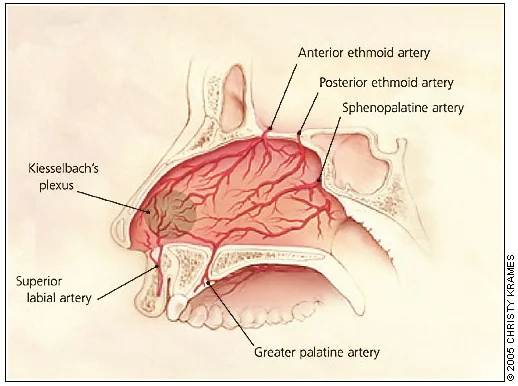
The vascular supply - from branches of the internal carotid arteries and  branches of the external carotid arteries

The anterior portion of the nasal septum - Kiesselbach’s plexus - majority of epistaxis 

Posterior epistaxis - mainly sphenopalatine artery and terminal branches of the maxillary artery

Figure-1.jpg


Where do you start with nosebleeders?

 Assessment:

  • The usual: ABCs? Is your pt tolerating his/her secretions? Vitals? => Have the pt lean forward applying direct pressure on bilateral nares for at least 10 min, now we can ask some questions.

 History:

  • Onset, duration, and laterality of the current bleed?

  • Frequency, associated factors?

  • Review of systems: skin rashes (petechiae/pupura), easy bruising

  • Previous medical history: hepatic disease (cirrhosis), renal disease (uremia), nasopharyngeal carcinoma 

  • Social history: smoking (irritant), recreational drug use (specifically cocaine and other inhalants)

  • Medication review: NSAIDs, aspirin, ADP receptor blockers, anticoagulants

  • Family history: coagulation disorders


Management: the bleeding does not stop after direct pressure. What’s next?

  • => have the pt blow her nose to get rid of the clotts, examine the nares, look at the posterior oropharynx, if seems like an anterior nosebleed use topical vasoconstrictors (oxymetazoline and LET), cocaine and topical hemostatics like TXA soaked pledget 

  • => if patient continues to bleed, look for the source and attempt to cauterize chemically with silver nitrate or electrically.  Although that may not work on active bleeding

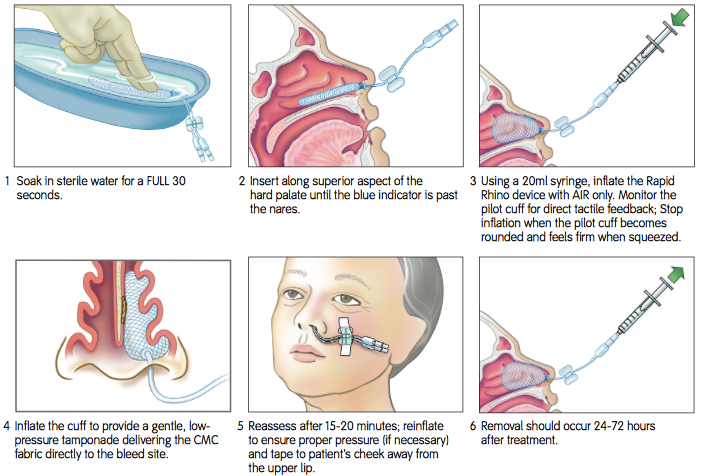
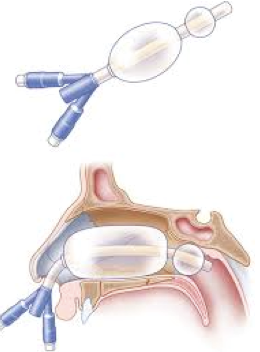
  • => if that did not work next step is nasal packing with nasal tampons, Rhino Rocket or balloon devices


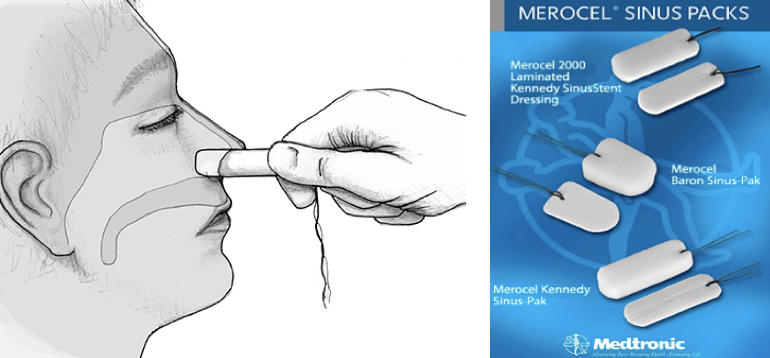
Nasal tampon:

Figure-2.png

 Rhino Rocket:

What if the bleeding doesn’t stop?

It's most likely a posterior bleed and now you should be sweating…

  • Call ENT/OMFS/IR/in some places Surgery

  • Get labs

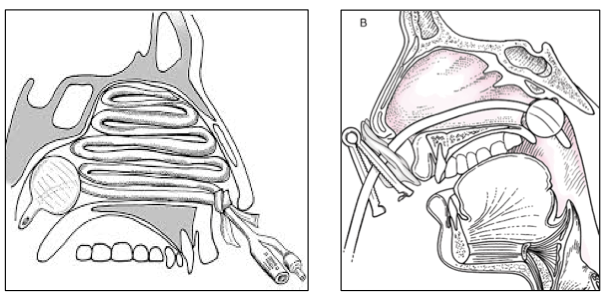
  • Consider Posterior nose packing: foley that should be available at every institution or specialized devises like Storz.

  • Consider antibiotics Antibiotics:

First Line: PO cephalexin 250–500 mg QID or PO amoxicillin/clavulanate 250–500 mg TID

Second line: PO clindamycin 150–300 mg QID or PO trimethoprim/sulfamethoxazole DS

Therapy should be continued for 7-10 days.

 Foley Catheter in Posterior Epistaxis


Storz 

Figure-5.png

Resources:

The Emergency Department Management of Posterior Epistaxis

http://www.emdocs.net/emergency-department-management-posterior-epistaxis/

EMCrit C3 Epistaxis


 ·