
POTD: Medical Trivia Potpourri

 ·   · 

Why is baby aspirin 81mg instead of 80mg?

This is a remnant of the medieval apothecary system. In the late 1700s, medication dosages in the apothecary system were based on the weight of a grain of barleycorn, with the unit of weight termed the grain (abbreviated gr)1. The standard dose of aspirin used back then was 5 gr, equivalent to 325mg. This is also why Tylenol tablets also comes in multiples of 325mg. Baby aspirin was one quarter of that, which is equivalent to 81mg.

Where does the term “mad as a hatter” come from?

Poisoning. This comes from mercury poisoning. In the 18th and 19th centuries, mercury nitrate was used in the process of turning animal fur into felt products. Many hatters developed tremors and neuropsychiatric symptoms during this period2.

How glucagon received its name.

Kimball and Murlin found that a substance secreted from the pancreas causes hyperglycemia when injected into rabbits and dogs. They decided to name this substance glucagon, short for “glucose agonist3.”

What animal venom contributed to research in GLPs?

Gila monster. In the 1990s, Dr. Eng was researching in how Gila monsters were able to maintain blood sugar despite long periods of not eating, and discovered a peptide called exendin-4 in its venom, this is structurally and functionally similar to GLP14.

Adrenaline vs epinephrine? Acetaminophen vs APAP?

It’s because the English language is derived from so many different roots. Adrenaline derives from Latin, “ad + renal”, or “on kidney”. Epinephrine derives from Greek, “epi + nephros”, which again translates to “on kidney.” The names from Tylenol comes from different abbreviations of its chemical structure.

  • Acetaminophen = N-acetyl aminophenol.

  • Paracetamol = N-acetyl-para-acetyl-amino-phenol.

  • APAP = N-Acetyl-Para-Acetyl-Amino-Phenol.

You think you’ve got a lot of (laryngeal) nerve?

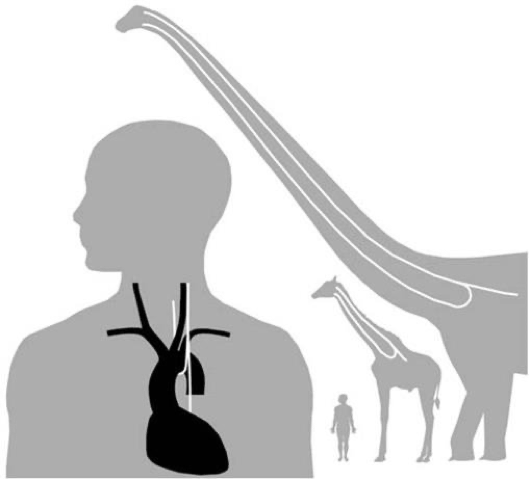
The recurrent laryngeal nerve branches from the vagus nerve (CN X) to innervate much of the larynx and control speech. Due to embryological development, the left and right laryngeal nerves wrap around the aortic arch and right subclavian vessels, respectively. As we develop, the heart grows further away from our throat, causing stretching of the “recurrent” nerve. This leads the nerve to make a 10cm U-turn in humans. In Giraffes, the recurrent laryngeal nerve approaches 5 meters. In dinosaurs, this is hypothesized to reach 28 meters5.
Was “War-farin” discovered during research as part of some war effort?

Close, but not quite. Actually, it's not really close either. Warfarin was discovered because of cows randomly bleeding to death. Cattle farmers invited researchers from the University of Wisconsin to figure out why. These researchers discovered that the cattle were eating moldy sweet clover hay, which was found to contain a substance called “coumarin” that anticoagulated the cows and caused them to hemorrhage. The patent rights for this discovery were given to the Wisconsin Alumni Research Foundation (WARF) which is where “WARFarin” originates from, as well as the generic name “Coumadin” from the substance coumarin6,7.

References

1.           Zupko RE. Medieval Apothecary Weights and Measures: The Principal Units of England and France. Pharm Hist. 1990;32(2):57-62.

2.           Where did the phrase “mad as a hatter” come from? HISTORY. Published May 8, 2023. Accessed January 1, 2024. https://www.history.com/news/where-did-the-phrase-mad-as-a-hatter-come-from

3.           Müller TD, Finan B, Bloom SR, et al. Glucagon-like peptide 1 (GLP-1). Mol Metab. 2019;30:72-130. doi:10.1016/j.molmet.2019.09.010

4.           Exendin-4: From lizard to laboratory...and beyond. National Institute on Aging. Published July 11, 2012. Accessed January 1, 2024. https://www.nia.nih.gov/news/exendin-4-lizard-laboratory-and-beyond

5.           The “Unintelligent Design” of the Recurrent Laryngeal Nerve. Office for Science and Society. Accessed January 1, 2024. https://www.mcgill.ca/oss/article/student-contributors-did-you-know-general-science/unintelligent-design-recurrent-laryngeal-nerve

6.           Warfarin Discovery | Wisconsin Alumni Association. Accessed January 1, 2024. https://www.uwalumni.com/news/warfarin/

7.           Ankit’s brain. Pharmacy Selective Rotation.

 · 

Trialysis Length

During a recent shift, Dr. Waters asked me “can I use a the 15cm trialysis line in the femoral vein?” To which I replied “I don’t see why not.” That got me thinking, is there a reason why not? We do have two length catheters after all (15cm and 24cm). Low and behold there is a reason why not to use the shorter length trialysis catheter there. The reason is that the catheter will not make it past the lumen of the common iliac vein and into the IVC where it is recommended the end of the catheter sit. CVCs pose certain risks such as CRBSIs, DVTs, and vessel stenosis. There are even case reports of vessel erosion happening when a catheter sits in the iliac and not in the IVC.

Bottom line; use the right size kit for the appropriate vessel, like Dr. Waters eventually did! The rest of this post is an overview on trialysis catheter placement.

Trialysis catheter placement in the emergent setting is a procedure undertaken to quickly establish vascular access for hemodialysis in critically ill patients with acute kidney injury or end-stage renal disease. This intervention becomes necessary when traditional vascular access methods, such as peripheral intravenous catheters or arteriovenous fistulas, are not feasible or fail to provide adequate blood flow for dialysis.

Indications:

Urgent Hemodialysis: In cases of severe acute kidney injury or end-stage renal disease, where immediate initiation of hemodialysis is required. “AEIOU” acidosis, refractory hyperkalemia, ingestion of certain substances (methanol, ethylene glycol, lithium, salicylates), overload of volume refractory to medical management, and uremia.

Contraindications:

  1. Vascular Anomalies or Injuries: Presence of significant vascular anomalies or injuries at the potential catheter insertion site.

  2. Local Infections: Infection at the proposed catheter insertion site.

  3. Severe Coagulopathy: Placement may be contraindicated in patients with uncontrolled bleeding disorders. (Relative contraindication – should use more compressible sites like the femoral vein)

Equipment Needed:

  1. Trialysis Catheter Kit: Includes the catheter, guidewires, dilators, and sheaths.

  2. Ultrasound Machine: To assist in locating suitable veins and ensuring proper catheter placement.

  3. Sterile Drapes and Gloves: To maintain aseptic conditions during the procedure.

  4. Local Anesthetic Agents: For numbing the catheter insertion site.

  5. Syringes and Needles: For administration of local anesthetic agents and other medications as needed.

  6. Suture and Dressing Materials: For securing the catheter in place and maintaining a sterile environment post-placement.

Procedure:

  1. Patient Assessment: Evaluate the patient's clinical status, coagulation profile, and vascular anatomy to determine the most appropriate site for catheter placement.

  2. Informed Consent: Obtain informed consent from the patient or their legal representative, explaining the risks and benefits of the procedure.

  3. Preparation: Position the patient appropriately, and ensure sterile conditions using drapes and gloves.

  4. Local Anesthesia: Administer local anesthesia at the proposed catheter insertion site.

  5. Ultrasound Guidance: Use ultrasound to locate a suitable vein and guide the catheter insertion, ensuring proper placement.

  6. Needle placement: With a needle attached to a syringe, insert the needle and begin withdrawing on the syringe while progressing, both to see when blood returns, and to ensure no introduction of air bubbles. Needles should be at a 45 degree angle when inserted. Preferably there is ultrasound visualization of the needle inside the lumen of the vessel.

  7. Guidewire insertion: Remove the syringe from the needle and progress the guidewire. This should be able to occur smoothly. If it is not progressing smoothly, you may need to drop the angle of the needle, as the guidewire may be getting forced against the backwall of the vessel. The wire should only go in about 20cm.

  8. Confirmation of guidewire: Ultrasound visualization should be done to confirm the guidewire. Never assume the guidewire is in the right spot. Know it is, by seeing it is. This should be done in both short plane and longitudinal plane.

  9. Incision: Incise at the site of the guidewire to be able to dilate and place catheter.

  10. Dilate (twice): The trialysis catheter requires double dilation given how large the catheter is. Place the dilator over the guidewire (without letting go of the wire). Go approximately halfway down the dilator, remove the dilator, and then repeat with the next dilator. (Be mentally prepared for a fair amount of blood).

  11. Catheter Insertion: Introduce the catheter through the dilated tract, securing it in place using sutures.

  12. Confirmation: Confirm proper catheter placement using imaging techniques such as fluoroscopy or ultrasound.

  13. Post-Procedure Care: Apply a sterile dressing, monitor for any complications, and secure the catheter to prevent accidental dislodgement.

Sources:

  1. National Kidney Foundation. (2006). "Clinical Practice Guidelines for Vascular Access." Retrieved from https://www.kidney.org/sites/default/files/docs/12-50-0210_jag_dcp_guidelines-va_oct06_sectiona_ofc.pdf

  2. American Society of Nephrology. (2006). "Clinical Practice Guidelines for Hemodialysis Adequacy, Update 2006." Retrieved from https://www.kidney.org/sites/default/files/docs/12-50-0900_anemiaworkbook_upd-0926.pdf

 · 

POTD: Wegovy and Ozempic

 ·   · 

GLP-1 class medications have recently grown in popularity. Two of the most popular GLP medications today, Wegovy and Ozempic, both have semaglutide as their active ingredient. They have come into the limelight after a large double-blinded study published in NEJM, showed an average 14.9% decrease in weight in obese patients given semaglutide on top of lifestyle modifications, compared to 2.4% in the control arm (see research summary at end). It should be noted that this study was funded by Novo Nordisk, the pharmaceutical company that produces semaglutide. Coincidentally, Novo Nordisk’s stock valuation has tripled over the last 2 years since the release of the study.  


What are GLP-1 agonists?

GLPs were first hinted at in the 1960s, when scientists using radioimmunoassays to study glucagon formation in the pancreas unexpectedly saw elevated activity in the intestines during their surveys. Over the next decade, gut proteins were isolated and found to have 50% sequence similarity to glucagon, and these proteins were termed glucagon-like peptides 1 and 2 (GLP-1 & 2)1. Further studies suggested that GLP-1 stimulates both synthesis and secretion of insulin via multiple cAMP-dependent pathways.

Of significance to today’s popularity is evidence of GLP-1 mediated suppression of appetite via CNS targets1. Other interesting findings of GLP-1 suggest possible cardioprotective characteristics. Animal studies showed increased myocardiocyte glucose uptake and decreased reperfusion injury in dogs and rodents induced to have MI despite controlling for weight1.

Today, GLPs can be generally classified into 2 categories – long acting (administered once weekly) or short acting (administered daily), though most remain approved only for treatment of DM. In addition to semaglutide, another GLP-1 obtaining FDA approval for weight loss includes tirezepatide (Zepbound)2.

What are the adverse effects I need to be aware of?

Although GLP-1 class medications have been on the market for 2 decades now, rarer serious side effects are now being seen more simply due to recent increases in the number of people on these medications3. One effect that may impact emergency medicine interventions is GLP-1 induced delay in gastric emptying, increasing risk of aspiration in patients with airway compromise. Though the absolute risk of GLP-1 related aspiration during intubation is still low, case studies of large volume emesis in patients who fasted 20 hours have been concerning enough to prompt the American Society of Anesthesiology to issue a guidance suggesting holding GLP-1 agonists prior to elective intubations4,5.

Other serious adverse effects of GLP-1 include 9x increased risk of pancreatitis, 4x increased risk of bowel obstruction, 3x increased risk of gastroparesis, though again the absolute risk of all these events were still < 1% per year.

Do I need to be worried about hypoglycemic events?

GLP-1s do not usually cause hypoglycemia, unless combined with another agent/therapy that is associated with hypoglycemia such as sulfonylureas or insulin injections6,7.

How accessible is semaglutide?

In short, not very. Current demand for the mediation is outpacing production. Novo Nordisk has reported they have run out of stock of Wegovy 1.7mg for the month of December and anticipate possible disruptions of related GLP-1 liraglutide supply8. Wegovy’s demand has crept into increased off-label prescriptions of Ozempic, reducing access for patients with diabetes9. Current prices on GoodRx show $900/month for Ozempic and $1400/month for Wegovy.

References

  1. Müller TD, Finan B, Bloom SR, et al. Glucagon-like peptide 1 (GLP-1). Mol Metab. 2019;30:72-130. doi:10.1016/j.molmet.2019.09.010

  2. FDA Approves New Medication for Chronic Weight Management. U.S. Food and Drug Administration. Accessed December 26, 2023. https://content.govdelivery.com/accounts/USFDA/bulletins/37a0d49

  3. Ruder K. As Semaglutide’s Popularity Soars, Rare but Serious Adverse Effects Are Emerging. JAMA. 2023;330(22):2140-2142. doi:10.1001/jama.2023.16620

  4. Gulak MA, Murphy P. Regurgitation under anesthesia in a fasted patient prescribed semaglutide for weight loss: a case report. Can J Anaesth J Can Anesth. 2023;70(8):1397-1400. doi:10.1007/s12630-023-02521-3

  5. Patients Taking Popular Medications for Diabetes and Weight Loss Should Stop Before Elective Surgery, ASA Suggests. Accessed December 26, 2023. https://www.asahq.org/about-asa/newsroom/news-releases/2023/06/patients-taking-popular-medications-for-diabetes-and-weight-loss-should-stop-before-elective-surgery

  6. Nauck M. Incretin therapies: highlighting common features and differences in the modes of action of glucagon‐like peptide‐1 receptor agonists and dipeptidyl peptidase‐4 inhibitors. Diabetes Obes Metab. 2016;18(3):203-216. doi:10.1111/dom.12591

  7. Suran M. As Ozempic’s Popularity Soars, Here’s What to Know About Semaglutide and Weight Loss. JAMA. 2023;329(19):1627-1629. doi:10.1001/jama.2023.2438

  8. Supply update. Novo Nordisk. Accessed December 26, 2023. https://www.novonordisk-us.com/content/nncorp/us/en.html

  9. McPhillips D. CNN Exclusive: Prescriptions for popular diabetes and weight-loss drugs soared, but access is limited for some patients. CNN. Published September 27, 2023. Accessed December 26, 2023. https://www.cnn.com/2023/09/27/health/semaglutide-equitable-access/index.html

 ·