POTD: Sedation meds for agitated patients

POV you’re on south and a patient in chairs wakes up and starts running around the doc box yelling and throwing their apple sauce everywhere. Security and psychiatry are no where to be found and you already attempted to verbally deescalate.

ED sedation is goal-directed, not one-size-fits-all. Medication choice should be based on the clinical goal (calm vs dissociate vs procedural), patient physiology, and airway risk. Rapid control of severe agitation is critical for the safety of the patient, staff, and surrounding patients.

Ketamine

Indications: Severe agitation, excited delirium, trauma, need to preserve airway reflexes

IV: 0.5–1 mg/kg (procedural: 1–2 mg/kg)
IM: 3–5 mg/kg
Onset: IV 1–2 min | IM 3–5 min
Pearls: Dissociation + analgesia
Watch for: Hypersalivation, vomiting, emergence reactions
Tip: Position upright when feasible to reduce aspiration risk

Midazolam

Indications: Anxiolysis, mild–moderate agitation, alcohol withdrawal
IV: 1–2 mg q2–5 min (usual max 5 mg)
IM: 5 mg
IN: 0.2 mg/kg (max 10 mg)
Onset: IV 2–3 min | IM 10–15 min | IN 5–10 min
Watch for: Respiratory depression especially with opioids or alcohol, avoid in elderly patients

Haloperidol

Indications: Psychosis-related agitation
IV/IM: 2.5–5 mg (may repeat; typical max 10 mg)
Onset: IV 5–10 min | IM 20–30 min
Pearls: Minimal respiratory depression
Watch for: QT prolongation, dystonia 

Droperidol

Indications: Acute agitation
IV/IM: 2.5–5 mg
Onset: IV 5 min | IM 5–10 min
Pearls: Rapid, reliable calming
Watch for: QT prolongation (risk low at ED doses)

Olanzapine

Indications: Agitation related to psychosis, bipolar disorder, delirium
IM: 5–10 mg (max 20 mg/day)
PO/ODT: 5–10 mg
Onset: IM 15–30 min | PO/ODT 30–60 min
Pearls: Effective calming with low EPS risk

Dexmedetomidine

Indications: Cooperative sedation, ICU-bound agitation
IV infusion: 0.2–0.7 mcg/kg/hr
Onset: 10–20 min
Pearls: Preserves respiratory drive
Watch for: Bradycardia, hypotension

Propofol

Indications: Procedural sedation (full monitoring and airway readiness required)
IV: 0.5–1 mg/kg bolus, then 10–20 mg PRN
Onset: 30–60 seconds
Pearls: Rapid on/off
Watch for: Hypotension, apnea

The classic haloperidol 5 mg + lorazepam 2 mg works- however, evidence suggests faster alternatives exist with similar or better safety profile including:

  • Droperidol 5 mg + midazolam 5 mg IM, or 

  • Ketamine when safety concerns are immediate

https://www.acepnow.com/article/which-sedatives-are-best-for-managing-severe-agitation-in-the-emergency-department/?singlepage=1

https://pubmed.ncbi.nlm.nih.gov/34353650/

https://www.ncbi.nlm.nih.gov/books/NBK551685/
 · 

VOTW: Fake aneurysm, Real Problems

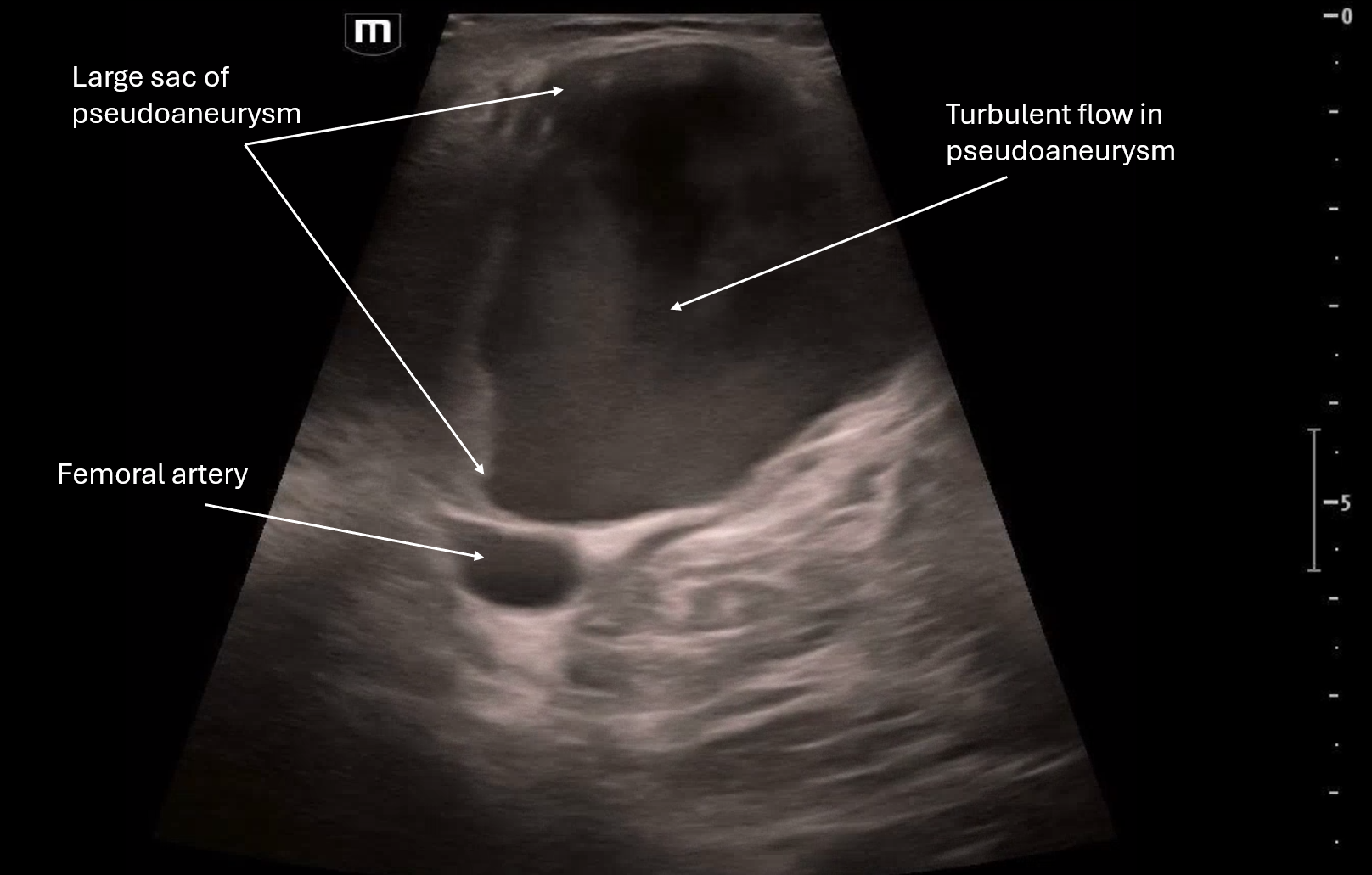
83 y/o male with PMHx of HLD, former smoker, CAD s/p recent LHC complicated by dissection, pericardial effusion, respiratory failure requiring intubation, and Impella placement in right groin 2 months ago presents to the ED with worsening swelling in the right groin over the past several weeks that was pulsatile on physical exam.

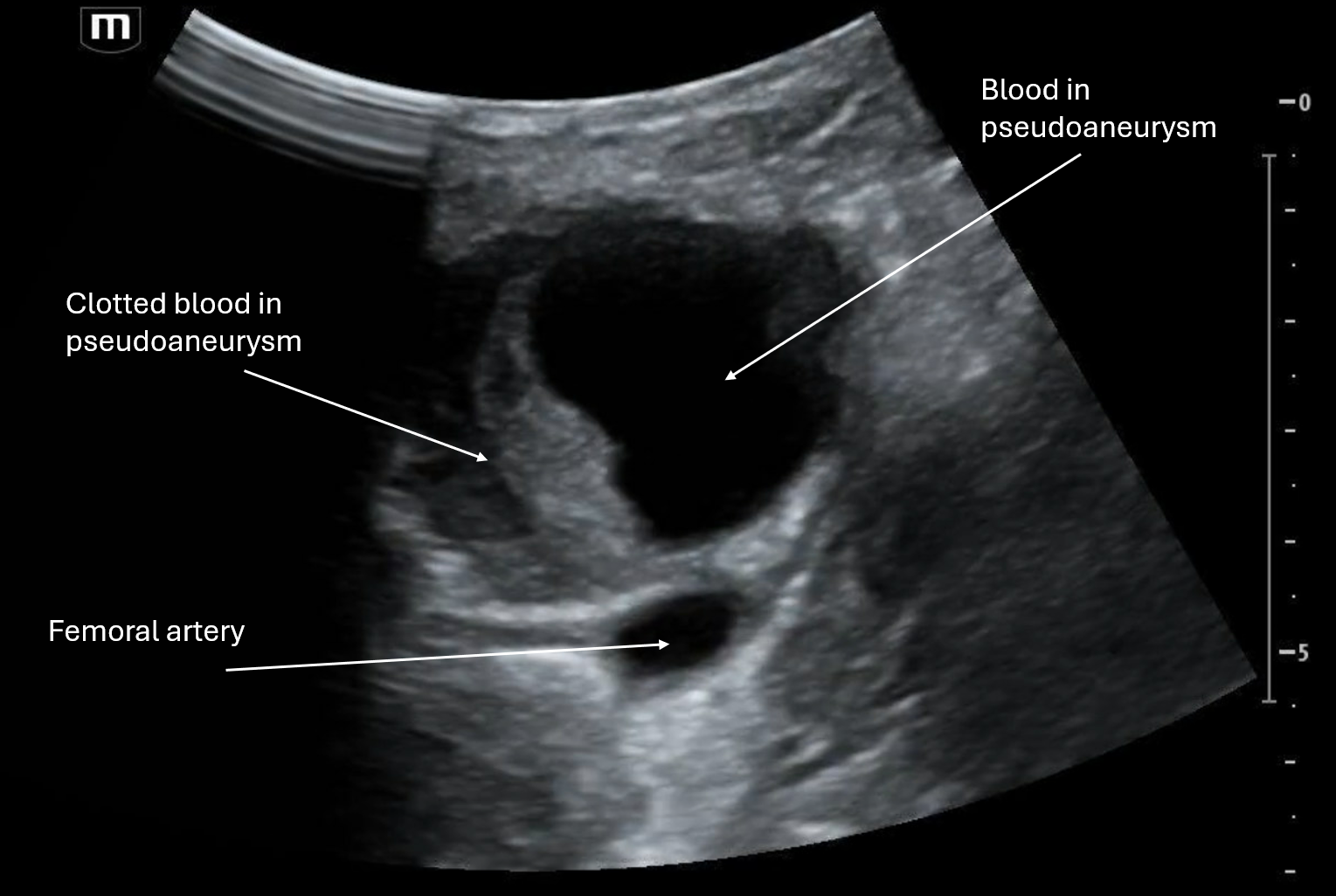
Clip 1 shows a transverse view of the femoral artery and the large approximately 6cm x 4cm x 5cm pseudoaneurysm sac with "echo-smoke" which is turbulent blood flow from the femoral artery causing a "flame-like" or "swirling" pattern on ultrasound.


Clip 2 shows components of clotted blood and unclotted blood in the pseudoaneurysm.


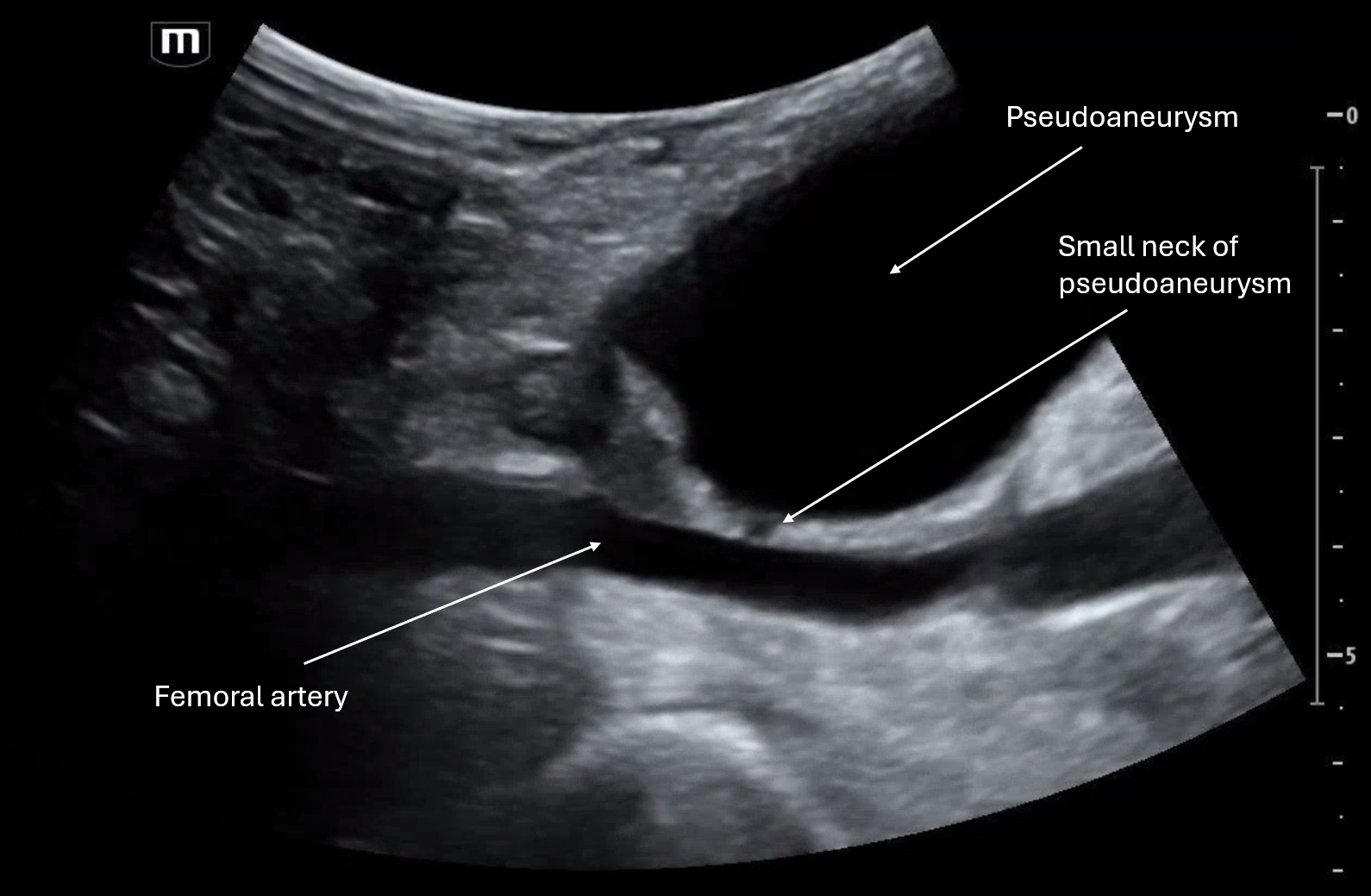
Clip 3 shows a longitudinal view of the femoral artery with the neck connecting it to the pseudoaneurysm.


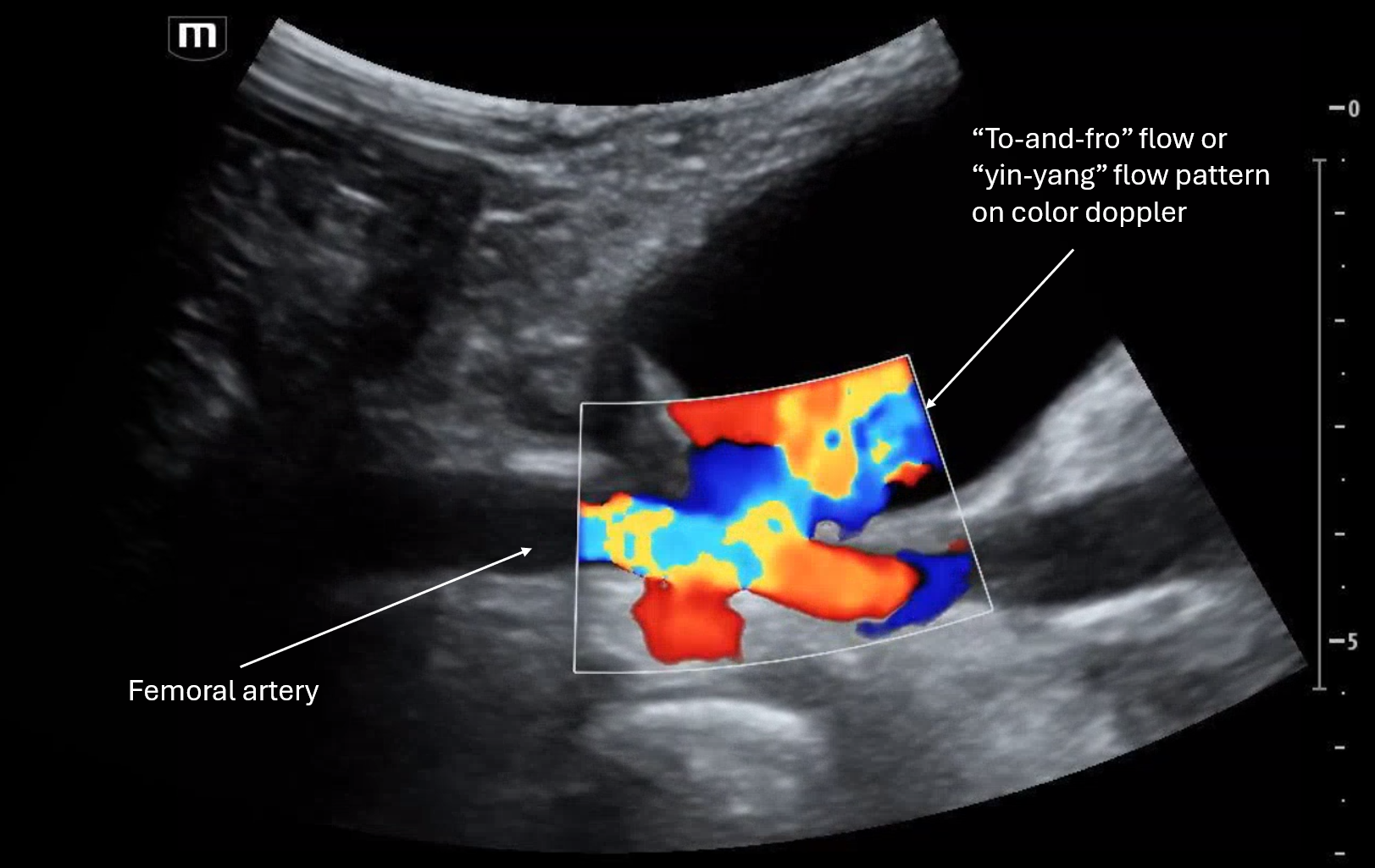
Clip 4 shows color doppler over the neck of the pseudoaneurysm and the "to-and-fro" or "yin-yang" flow pattern.

Vascular surgery performed an ultrasound guided thrombin injection of the right groin pseudoaneurysm and the next day patient was taken to the OR for hematoma evacuation and repair of the right femoral artery pseudoaneurysm.

POCUS pearls for pseudoaneursyms:

  • Pulsatile mass with "yin-yang" or "to-and-fro" flow pattern in the neck = pseudoaneurysm

  • Large sac (>2 cm), narrow neck; first line treatment is thrombin injection

  • Rapid expansion, infection, hypotension, or wide neck; may require emergent vascular surgery

  • Avoid compressing a large pulsatile mass without plan due to rupture risk

References

  1. Toursarkissian B. Pseudoaneurysm from iatrogenic femoral artery injury. J Am Coll Surg.

  2. Webber GW. Pseudoaneurysm: diagnosis and management. Clin Radiol.

  3. Schaub F. Thrombin injection for postcatheterization pseudoaneurysm. J Am Coll Cardiol.

  4. Mahler B. POCUS for vascular complications. Ann Emerg Med.


 · 

VOTW: A Tale of Two Lumens

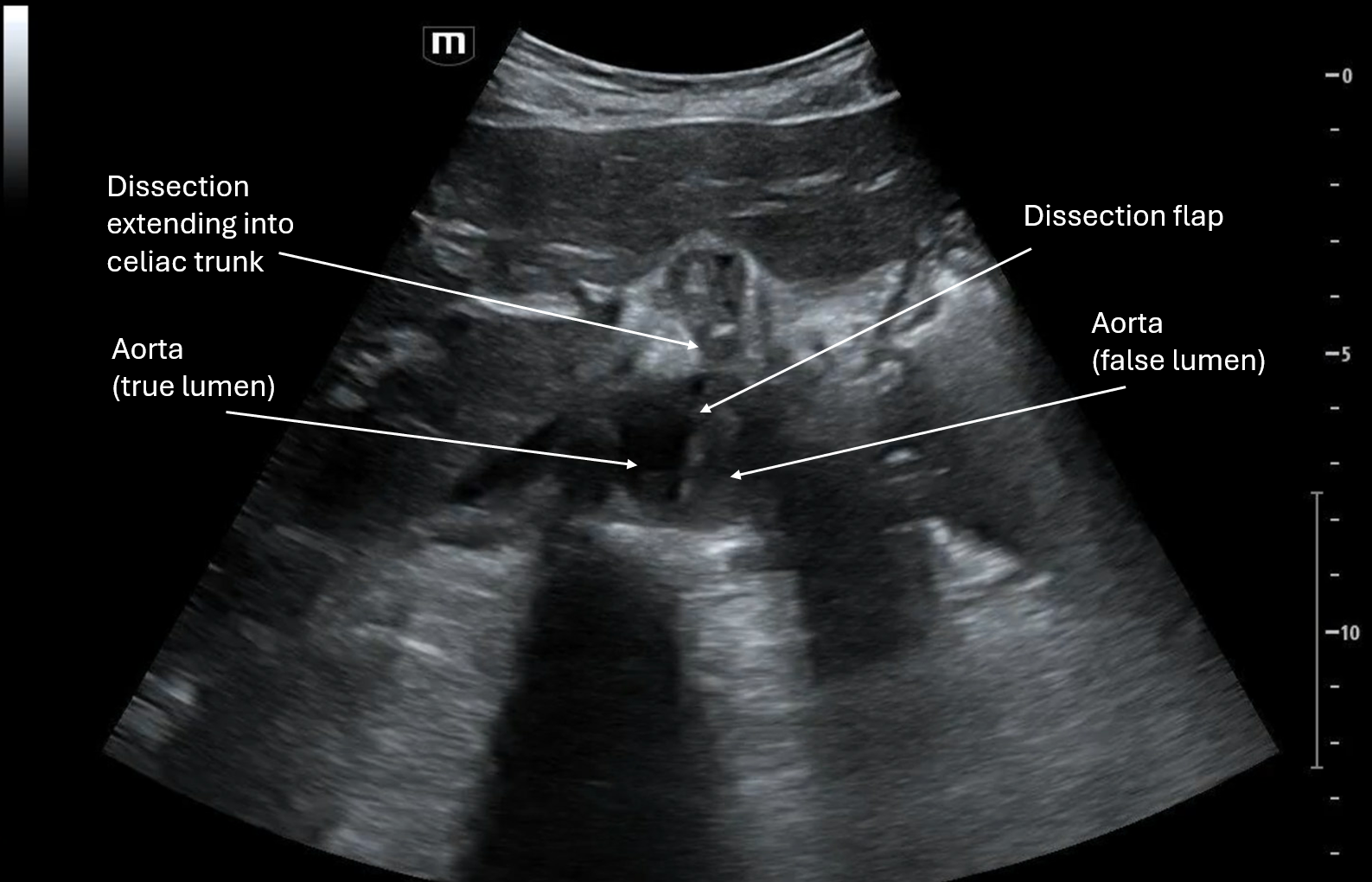
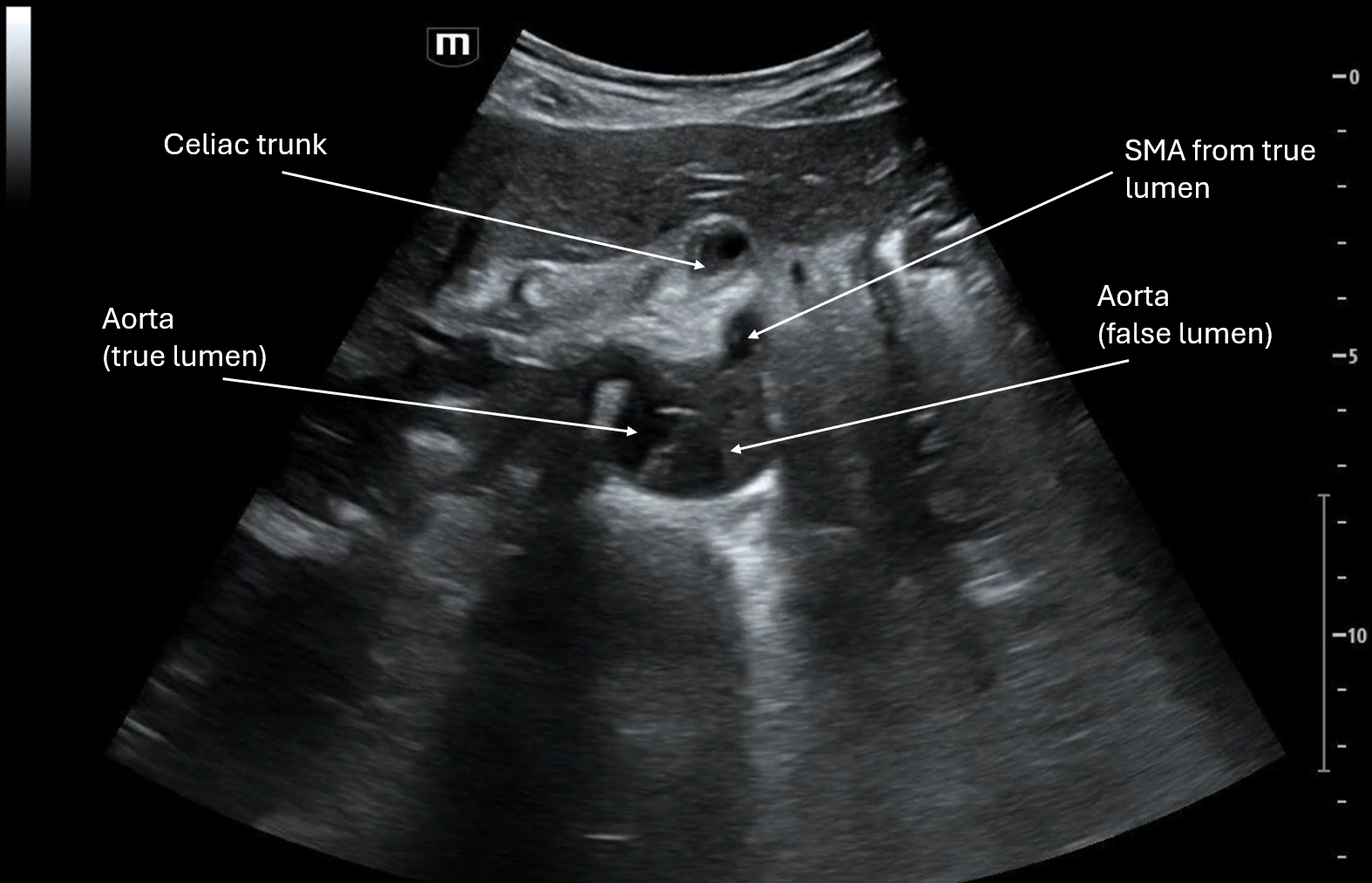
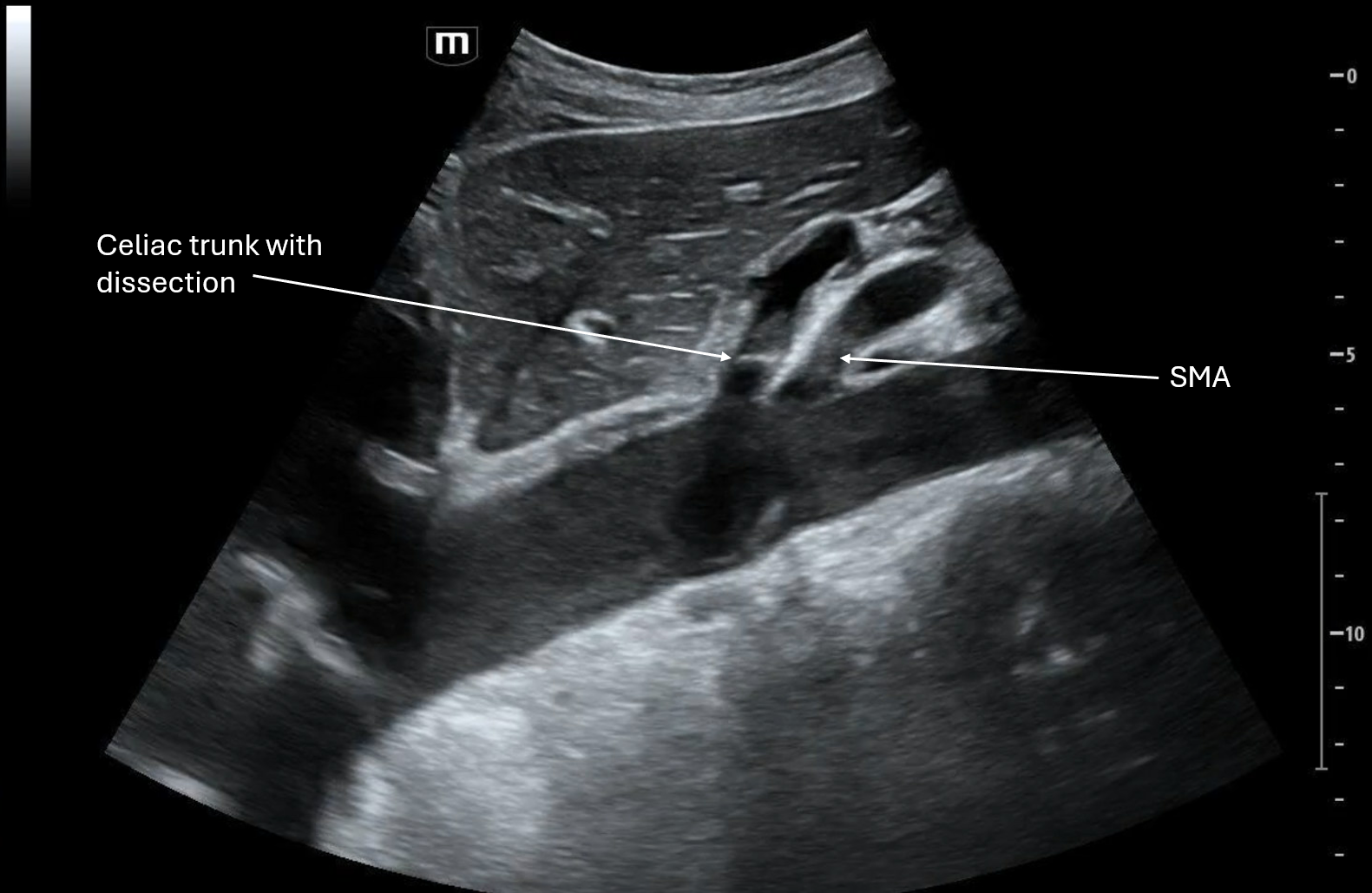
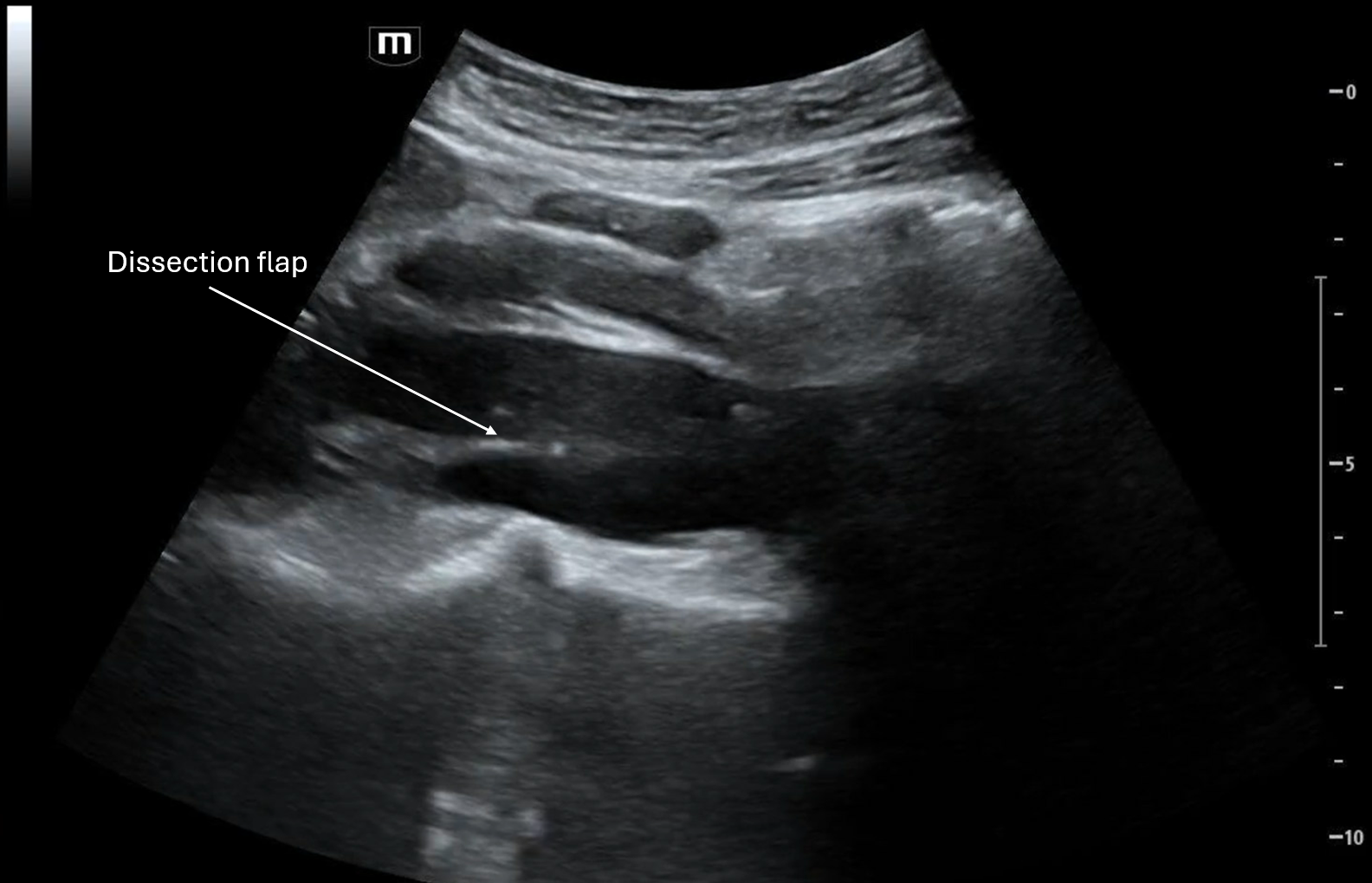
58 y/o male with PMHx of HTN, CVA in 2013, seizures, and 40+ PPD smoking hx was transferred from outside hospital for aortic dissection. Patient reports worsening back, abdominal pain, nausea x2 days with associated bilateral lower extremity pain, weakness, and inability to walk.


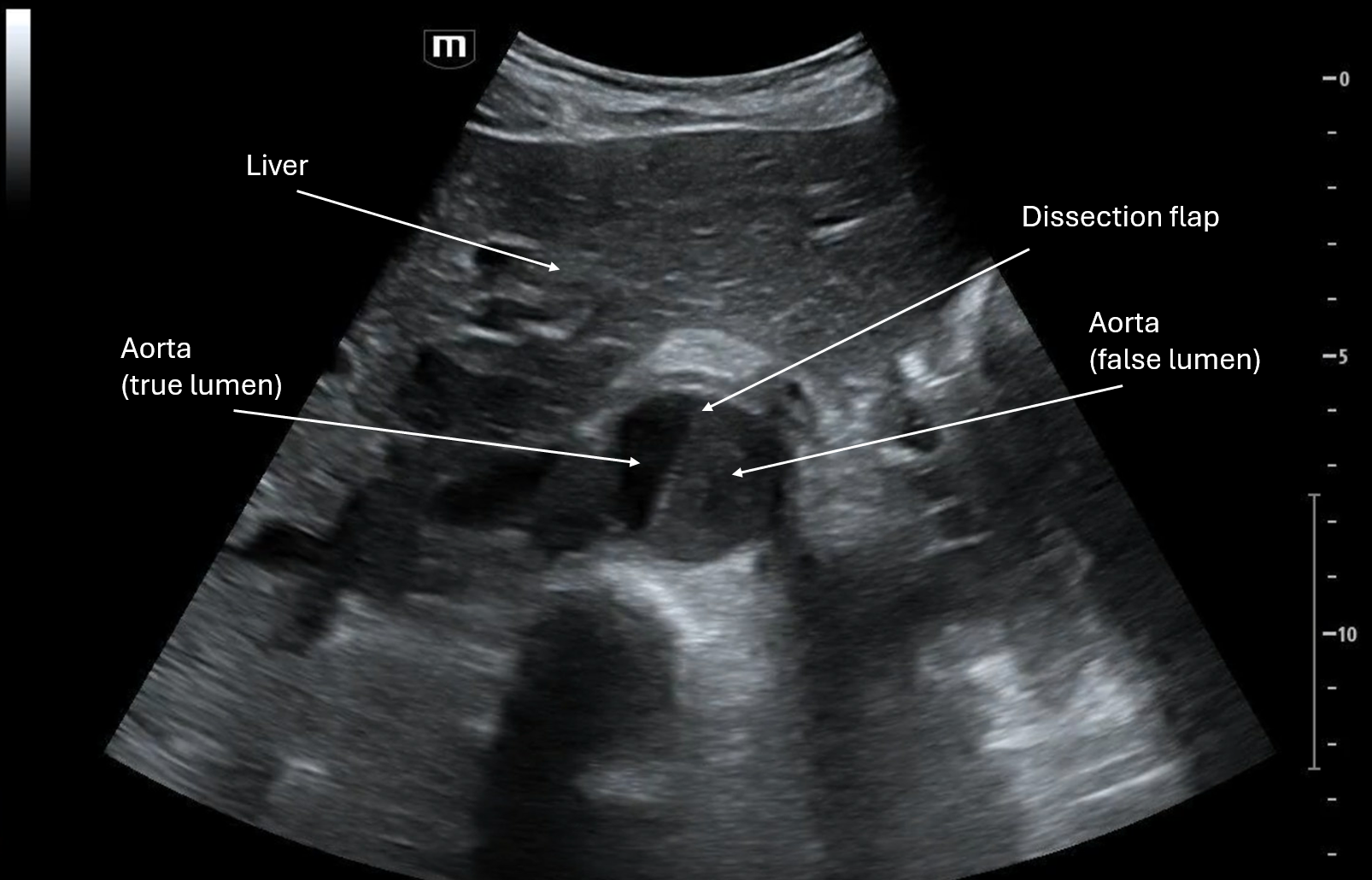
Clip 1 shows a transverse view of the proximal aortal with a dissection flap between what appears to be the true lumen and the false lumen.

As the clip goes on we see the branch points of the celiac trunk and the SMA, it appears that the dissection involves the celiac artery.

In Clip 2, the longitudinal view of the aorta includes the celiac trunk and the SMA, again it appears that there is a flap in the celiac trunk but not in the SMA.

Clip 3 is another longitudinal view of the aorta with the dissection flap.

CTA Chest/Abdomen/Pelvis revealed a type B dissection from the aortic arch to bilateral external iliacs, with a dissection flap extending into the celiac artery with SMA and R renal artery originating from the true lumen.

POCUS Pearls for Aortic Dissection

  • Scan the aorta in chest/back/abd pain with shock or syncope

  • Abdominal aorta should be < 3 cm, Aortic root should be < 4 cm

  • Look for dilation, flap, double lumen, and pericardial effusion

  • Obtain both transverse and longitudinal abdominal views of the aorta; parasternal long axis can visualize the beginning of the aortic root with the suprasternal notch view to visualize the aortic arch

  • Can utilize color doppler to distinguish true lumen (faster flow) from false lumen (slow/swirling)

  • Red flags: aortic root dilation + pericardial effusion → Type A dissection until proven otherwise

  • Negative POCUS ≠ rule out aortic dissection, CTA if clinical suspicion is high

  • If you see anything abnormal → escalate immediately

References:

  1. Nazerian P et al. POCUS protocol for acute aortic syndromes. Acad Emerg Med. 2019.

  2. Moore CL et al. US in aortic emergencies. Acad Emerg Med. 2007.

  3. Evangelista A et al. Key imaging findings in acute aortic dissection. Circulation. 2003.

  4. Kimura BJ. Focused echo for aortic root dilation. JASE. 2012.

  5. Nienaber CA & Clough RE. Acute aortic syndromes overview. Lancet. 2020.

 ·