TASER

Happy Tuesday! I hope you all enjoyed your Labor Day Weekend. 

For this week’s trauma Tuesday topic, I wanted to discuss Tasers. In the past 2 years I have seen a handful of patients in NYPD custody in need of medical checks as a result of being tased. 

Taser guns were first developed in the 1970’s. The name is actually an acronym which stands for Tom A. Swift Electric Rifle. The inventor, Jack Cover, was a huge fan of the science fiction book series featuring the main character Tom Swift. The Taser was introduced for use by law enforcement in the 1990s. It falls under the category of less-lethal weapons which also includes batons, mace, tear gas, and projectiles like foam rounds.
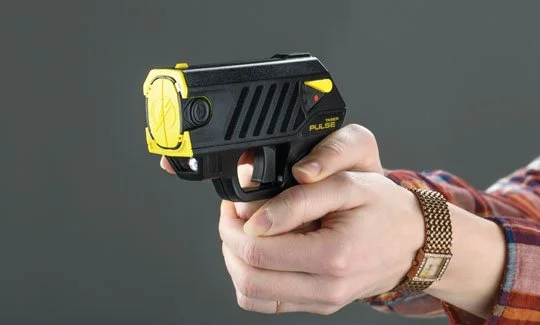
The Taser is a type of Conducted Electrical Weapon. Pulling the trigger releases the compressed nitrogen. The 2 pronged darts that are attached to a copper wire fire out. As the darts make contact with skin, the electrical circuit is completed and electricity courses through. As it does, it causes painful involuntary muscle contraction. 

As of 2019, the American Academy of Emergency Medicine does not recommend routine workup in an otherwise well appearing and asymptomatic individual who was exposed to less than 15 seconds of electrical current. No need for EKG’s, laboratory testing or observation. There has been little evidence showing significant medical harm or physiologic change in patients who have received a Taser shock, even in those who have underlying cardiac abnormalities or defibrillators.

It is important to assess the skin and area that was struck by the prongs. Those can cause minor burns and skin injury. There have been isolated case reports of the metal barbs causing penetration injuries as well. This is a case study where a patient had a barb stuck in his penis. Also consider other injuries that someone may sustain if they had gotten tased and fallen onto the ground. 

References

  1. https://www.aaem.org/statements/evaluations-after-a-taser-device-activation/ 

  2. https://www.britannica.com/topic/TASER 

  3. Baliatsas C, Gerbecks J, Dückers MLA, Yzermans CJ. Human Health Risks of Conducted Electrical Weapon Exposure: A Systematic Review. JAMA Netw Open. 2021 Feb 1;4(2):e2037209. doi: 10.1001/jamanetworkopen.2020.37209. PMID: 33576818; PMCID: PMC7881359. 

  4. Theisen K, Slater R, Hale N. Taser-Related Testicular Trauma. Urology. 2016 Feb;88:e5. doi: 10.1016/j.urology.2015.11.011. Epub 2015 Dec 1. PMID: 26592466. 

  5. Bralow LM. Misfire: A man with genital trauma. J Am Coll Emerg Physicians Open. 2022 Dec 21;3(6):e12875. doi: 10.1002/emp2.12875. PMID: 36570370; PMCID: PMC9772490.
 · 

VOTW: “D”-oh! What a heart!

Hello all! This week’s VOTW is brought to you by myself.

Hospital course

30 y/o M presents to the ED after 2 syncopal episodes. He had 10 days of worsening dyspnea on exertion with chest pressure and palpitations. He flew to California 1 month ago and returned yesterday.  

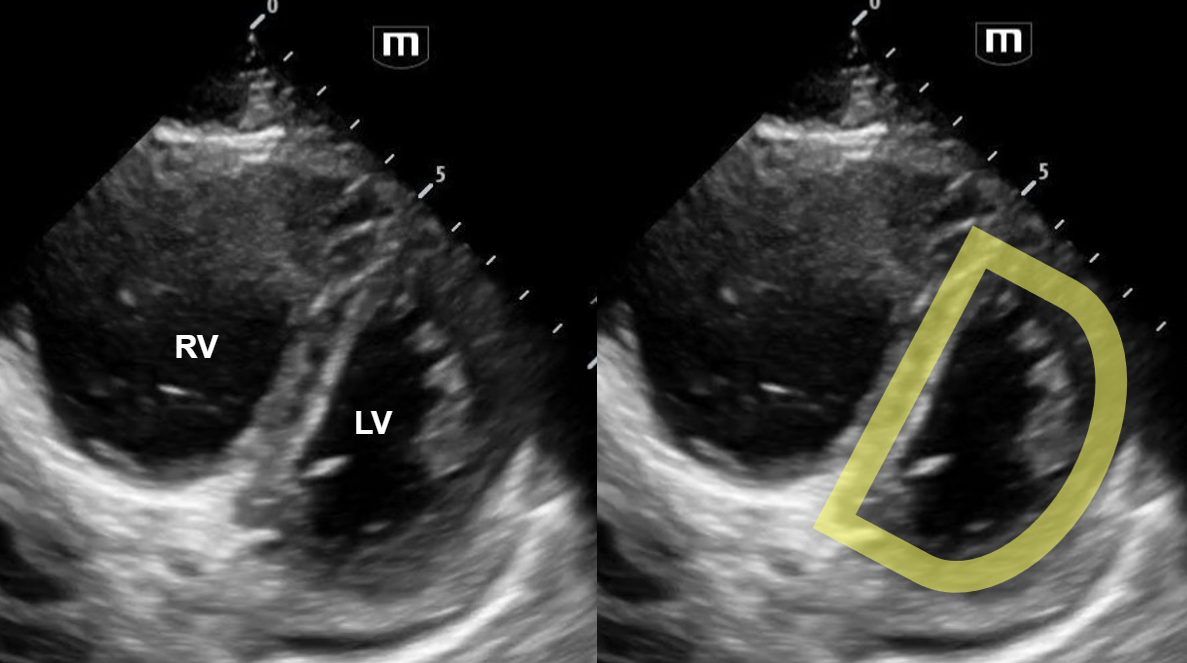
In the parasternal short view of the heart above, we see two cardiac chambers, the right ventricle (RV) and the left ventricle (LV). We can see flattening of the interventricular septum towards the LV chamber, creating a “D”-shaped LV (labelled above).

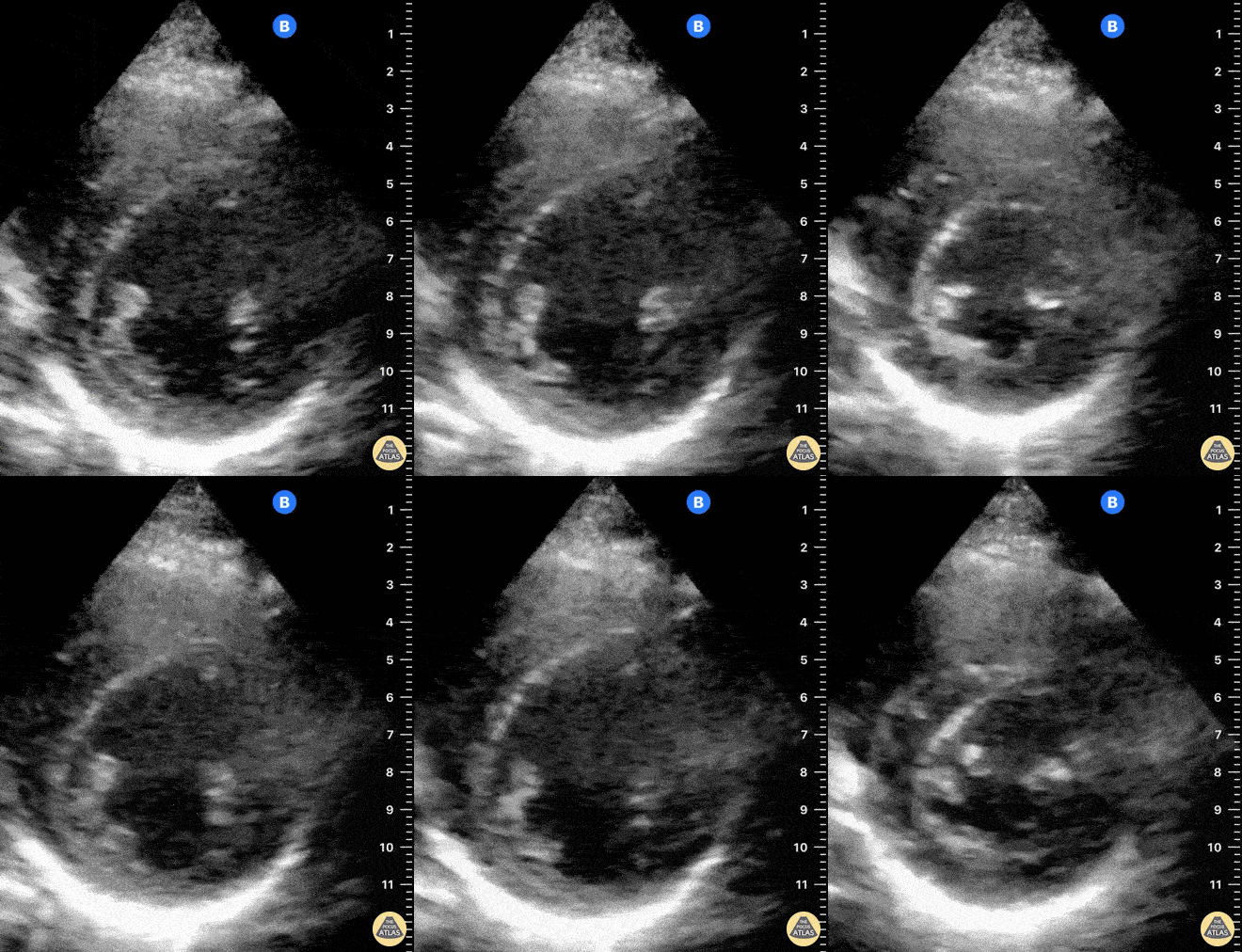
View the attached clip to see the LV take on a shape of the letter “D” with each contraction! Also note that the RV is dilated and appears larger in size than the ”D”-shaped LV.

The clip above shows a parasternal short view of a normal heart. Notice that the left ventricle appears circular, and the right ventricle forms a smaller crescent-shape surrounding the left ventricle.

Case Conclusion

CT imaging showed pulmonary emboli within the bilateral pulmonary arteries and dilatation of the right atrium and right ventricle associated with right heart strain.

Thrombectomy was deferred because patient was hemodynamically stable. He was started on a heparin infusion in the ED and then admitted.   

Right heart strain

·       Pulmonary embolism can cause an acute increase in pulmonary pressures and right ventricular afterload that causes increased right heart strain. Focused ultrasound has been shown to be both highly sensitive and highly specific in detecting anatomical changes of the heart seen with right heart strain.

·       “D-sign” is a finding suggestive of right heart strain seen on the parasternal view of the heart. Increased right ventricular pressures cause bowing of the interventricular septum into the LV, causing the “D”-shaped LV to form.

·       Other findings suggestive of right heart strain include increased RV size, McConnell’s sign, and TAPSE.


Happy scanning!

Sono team

PS: just in case nobody gets it, the subject line pun is a Simpsons reference!


Resources to review:

·       https://www.thepocusatlas.com/right-ventricular-dysfunction/

·       https://everydayultrasound.com/blog/category/Right+Ventricular+Strain

·       https://www.acep.org/sonoguide/basic/cardiac

 · 

POTD: Those Hips Don't Lie

To kick off the block I’ll be talking about hip dislocations as today is ~Trauma Tuesday~ after all. I have only attempted to reduce one hip myself and it was while I was at Midwood Community hospital a few weeks ago. Dr. Duo Xu and I were pushing and pulling with all our might but despite all our best efforts, ultimately it was unsuccessful and the patient was transferred to MMC main for orthopedics. Honestly, we were not surprised as the patient had dislocated it the prior day and also had a hip replacement. This inspired me to want to delve into this topic some more, especially on reduction techniques. 

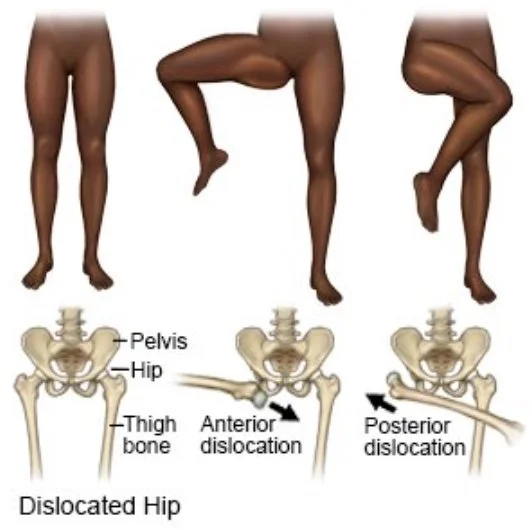
Classifications

Posterior: Most common, 90% of hip dislocations

  • Occurs when an axial load is applied on a Flexed and ADDducted hip

  • ie motor vehicle crashes where patient's knee hits the dashboard

Anterior: 10% of hip dislocations

  • Occurs when an axial load is applied on a Extended and ABducted hip 

As with other dislocations, you always want to be mindful of injury to the nearby vessels and nerves. Depending on the mechanism of injury, there may be an underlying fracture. If there is an associated fracture, this becomes a complex dislocation.

Management for simple closed isolated hip dislocation

  • Obtain xray films, pain medication 

  • Reduce ideally under 6 hours to reduce chances of developing avascular necrosis. One study found that after 6hrs, 53% of patients developed avascular necrosis 

  • Procedural sedation 

Management for complex closed isolated hip dislocation 

If there is an associated femoral fracture then you’ll need to get orthopedics on board. They may take the patient to the OR and have everything taken care of intra-operatively. 

Reduction techniques

There are dozens of methods and various combinations/modifications but I'm going over a few that I think are more intuitive and less likely to injure myself.

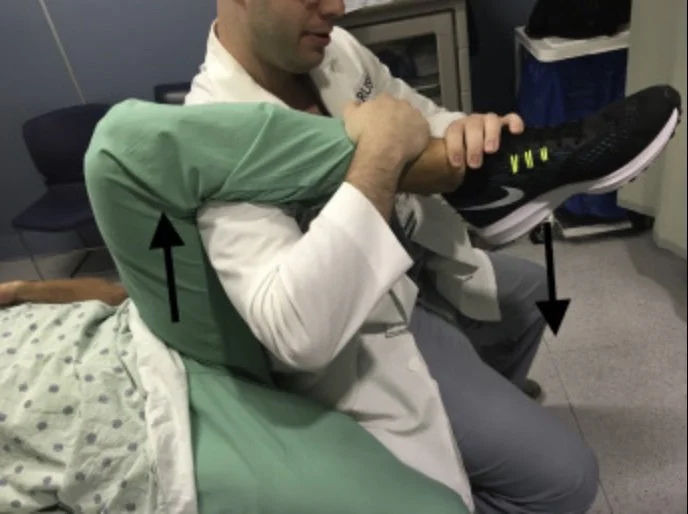
Rocket Launcher

Patient supine in stretcher almost with both legs hanging off stretcher 

You flex their knee and facing their feet, put your shoulder underneath the posterior fossa/calf with hands around lower tibia/ankle 

Use your shoulder to press upwards while hands pull down

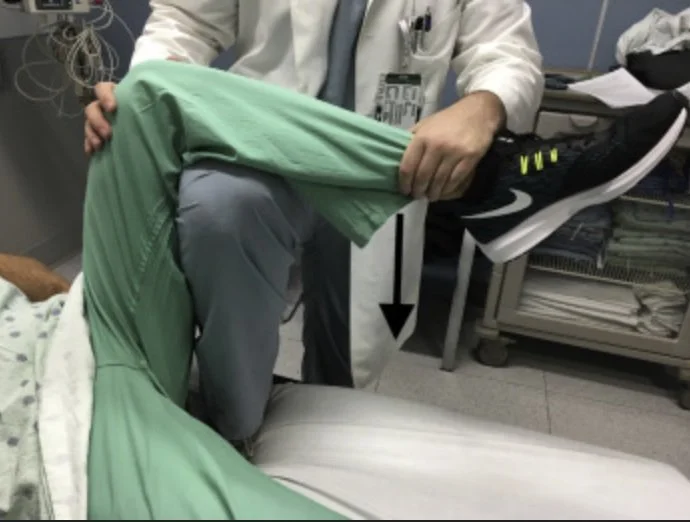
Captain Morgan 

Patient supine in stretcher 

You have one leg flexed on stretcher and other leg flat on ground with patient’s calf on your thigh 

Push down by patient’s ankle, can also plantarflex your foot that’s on the stretcher to get more leverage

For short kings and queens a step stool may be helpful, I could barely get my foot comfortably up on the stretcher without feeling like I was about to dislocate my own hip 

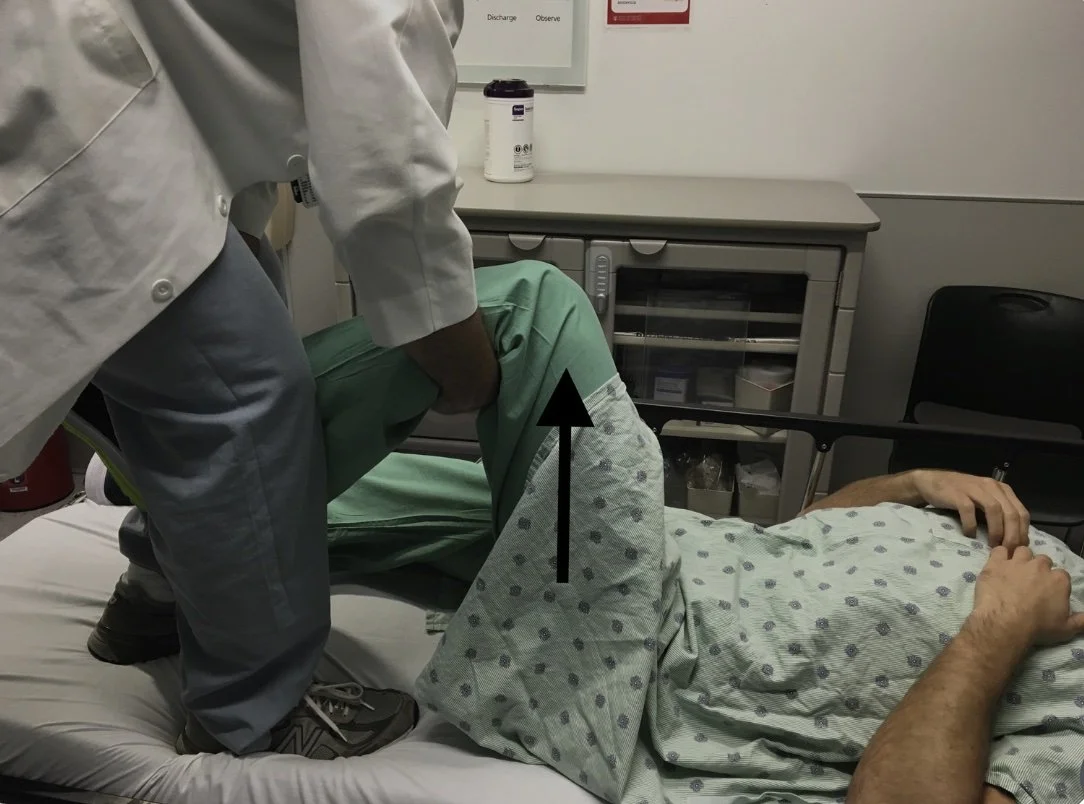
Allis 

Patient supine in stretcher 

You put your hands around ipsilateral tibia, standing on stretcher can get you better leverage 

Pull upwards, remember that consistent traction is key

Some personal takeaways 

  • Don’t forget you need a nurse to record vitals / draw meds during the procedural sedation and during that time you are utilizing a lot of resources. 

  • You need at least one assistant to help keep the pelvis in place while you are reducing for all these maneuvers shown above

  • Maximizing pain relief and relaxation will increase your chances of success, your patient should be loosey goosey. Consider a regional nerve block (femoral, fascia iliaca)

  • Dislocated hardware joints are extremely difficult to reduce, once I had three orthopedic residents yanking on a dislocated hip while the EM attending and I helped pull traction

  • You may wake up sore the next day 

References: 

  1. https://www.orthobullets.com/trauma/1035/hip-dislocation 

  2. https://coreem.net/core/hip-dislocation/ 

  3. https://www.merckmanuals.com/professional/injuries-poisoning/how-to-reduce-dislocations-and-subluxations/how-to-reduce-a-posterior-hip-dislocation#Equipment_v45399602

  4. https://www.annemergmed.com/article/S0196-0644(22)00050-6/fulltext 

 ·