
67 yo female with PMH of pericardial effusion (s/p subxiphoid pericardial window 9/18/2026), asthma/COPD, HTN, TR, CAD, HLD, and anemia presenting with 3 days of chest pressure that is worse lying flat and better sitting up, plus exertional dizziness. Vitals stable apart from mild tachycardia in the low 100s, comfortable on room air.
Bedside POCUS showed:
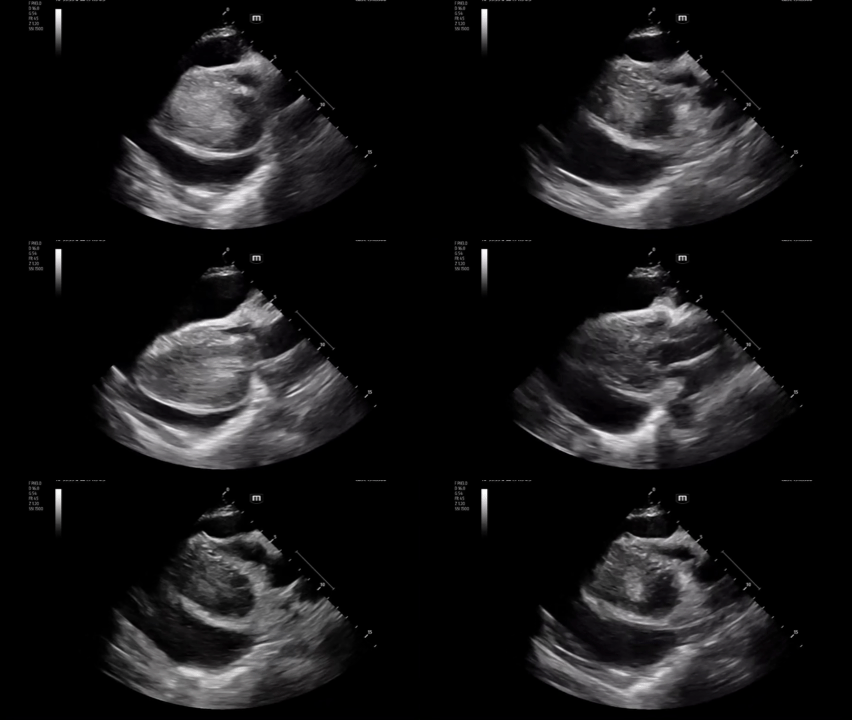
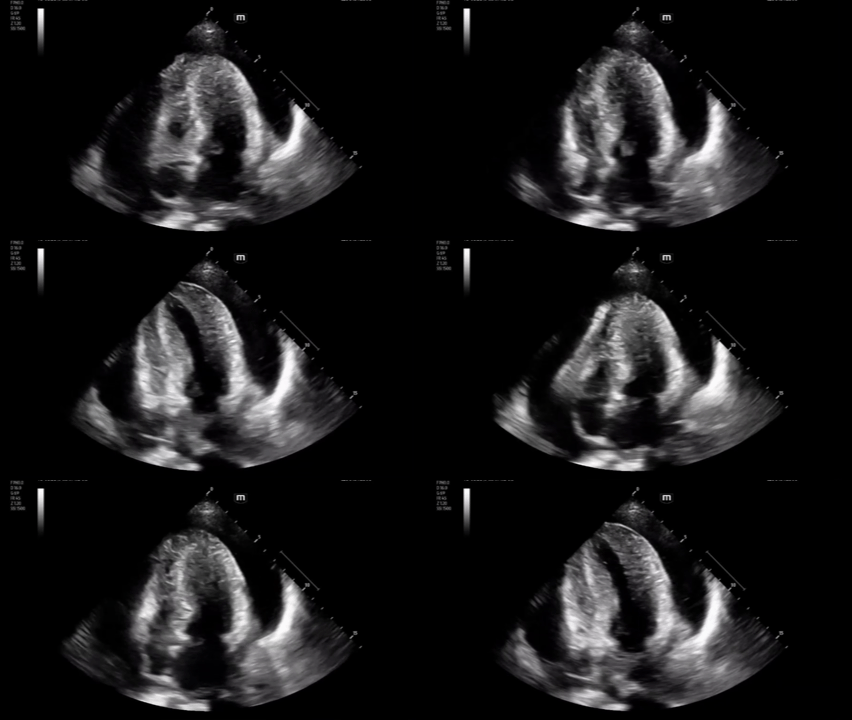
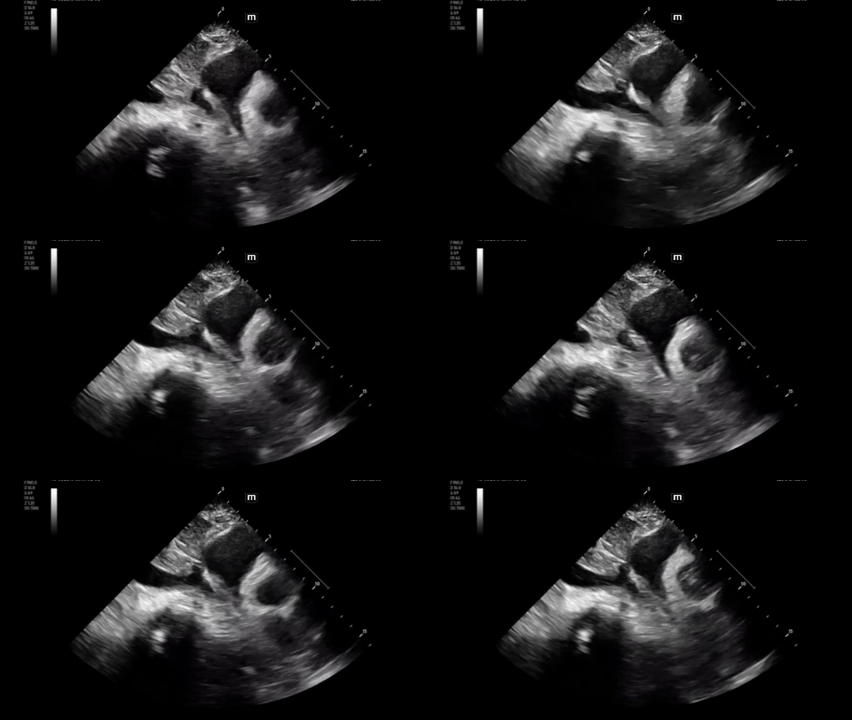
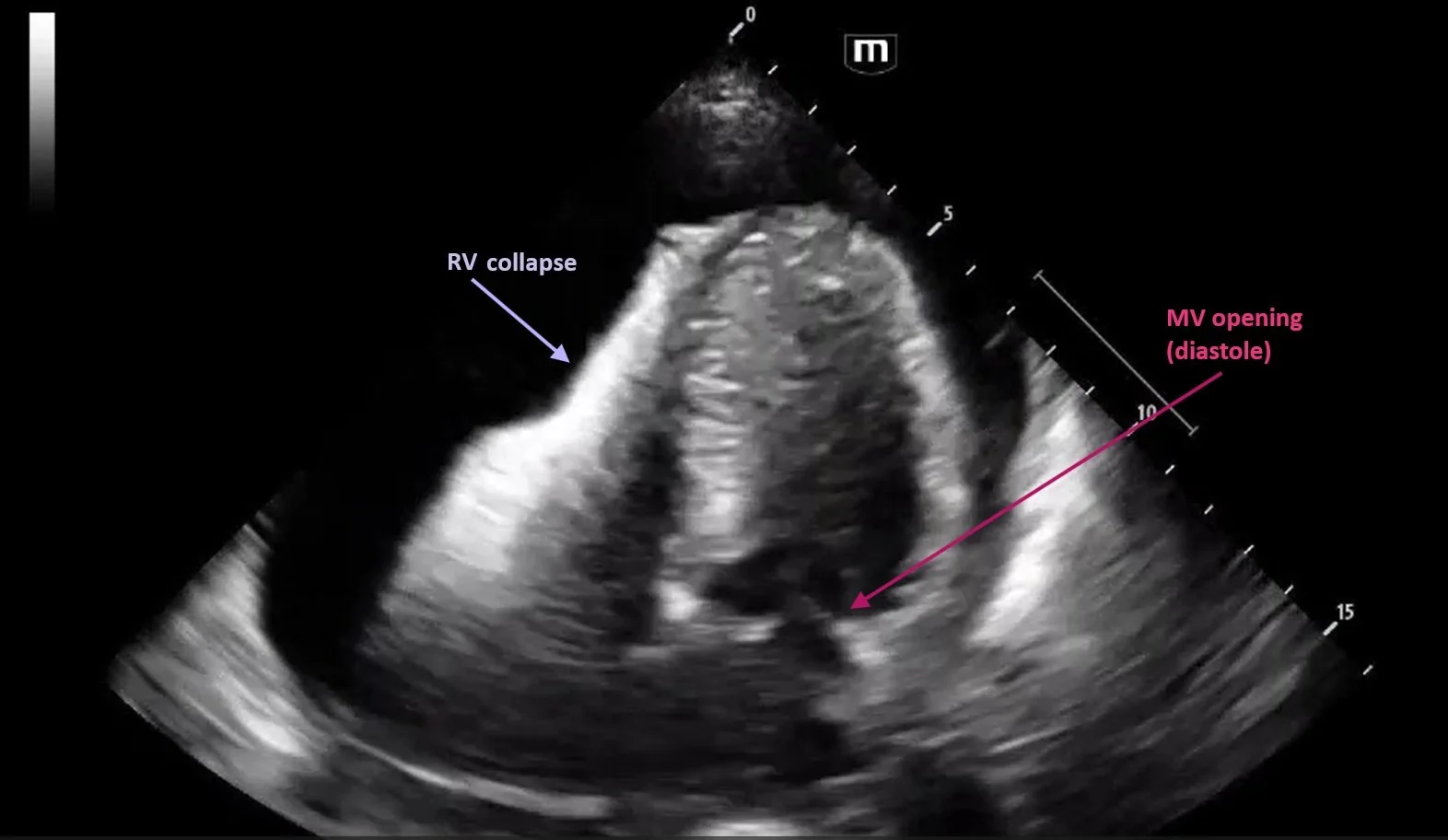
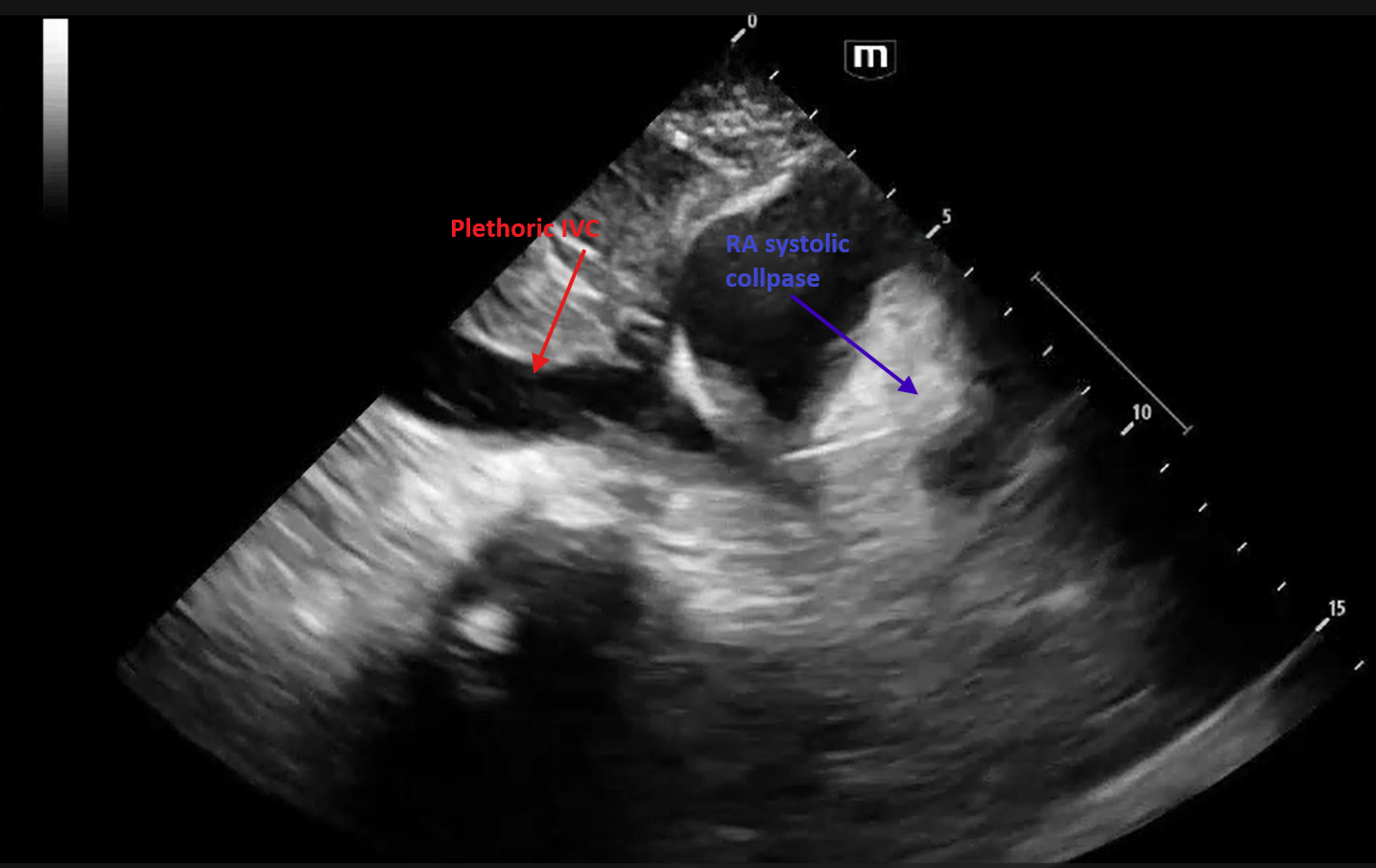
In the parasternal long axis and apical 4-chamber views, you can see a large pericardial effusion with the heart swinging freely inside it. This is 💡sonographic alternans, the ultrasound cousin of electrical alternans. The ECG shows alternating QRS amplitude because the heart is swinging, and here you can watch the swing itself. You can also see RV diastolic collapse and RA systolic collapse. The IVC view shows a plethoric, non-collapsing IVC.
Early vs. late signs of tamponade:
Early: RA systolic collapse. It is the earliest and most sensitive sign, but less specific, especially if it lasts under about a third of the cardiac cycle.
Later: RV diastolic collapse. It needs higher pericardial pressure, so it is more specific.
Also late: plethoric IVC (sensitive but nonspecific, since it just reflects high RA pressure) and exaggerated respiratory variation in mitral/tricuspid inflow.
Case follow-up: The patient received 2 L IV fluid, tolerated CT chest lying flat, and was admitted to the CTICU for close observation with OR planned for the next morning. On 10/31 she underwent an emergent repeat pericardial window with 1 L drained. Post-window echo showed only a trace effusion. She was started on colchicine 0.6 mg BID and is improving.
Happy Scanning!
Ultrasound Team
References:
Alerhand S, Carter JM. What echocardiographic findings suggest a pericardial effusion is causing tamponade? Am J Emerg Med. 2019;37(2):321-326.
Alerhand S, Adrian RJ, Long B, Avila J. Pericardial tamponade: A comprehensive emergency medicine and echocardiography review. Am J Emerg Med. 2022;58:159-174.
Adler Y, et al. 2015 ESC Guidelines for the diagnosis and management of pericardial diseases. Eur Heart J. 2015;36(42):2921-2964.
Spodick DH. Acute cardiac tamponade. N Engl J Med. 2003;349:684-690.
Appleton CP, et al. Cardiac tamponade and pericardial effusion: respiratory variation in transvalvular flow velocities studied by Doppler echocardiography. J Am Coll Cardiol. 1988;11:1020-1030.