It's getting hot in here - Pediatric Fevers

So, it's winter. Kids get sick. But really, 8-10 times a year is normal, so they're sick all the time! And they present to the ED with FEVER!!!!

What do you think about and what do you do with FEVER!?!?!?

- Fever = 38 degrees Celsius or 100.4 Fahrenheit

- Subjective fever per parents? Believe and work up/treat appropriately based on clinical presentation

- Determine exact onset and calculate fever duration (if since last night, it is only 1 day since <24 hours)

- Ask T-max
Thorough exams must include throat, ears, skin, oropharynx!

If suspect infectious etiology, treat with antipyretics:

Acetaminophen: 15 mg/kg every 4 hours, PRN

Ibuprofen (6 months and older): 10 mg/kg every 6 hours, PRN

The "alternating" approach of treating every 3 hours (Acetaminophen at 9, Ibuprofen at 12, Acet. at 3, etc) can help keep the kiddos' fever under control and keep them happy, hydrated, and hopefully home!

What to do!?


0-28 days infant: 

Orders: CBC with differential, Blood Culture, BMP, UA with culture, LP with CSF gram stain/cell count/culture/possible viral culture. +/- HSV PCR. +/- stool culture if presenting with diarrhea. CXR

Pathogens: Group B Strep, E. Coli, Listeria. Consider HSV

Treatment: Ceftazidime or cefotaxime + Ampicillin (for Listeria). or Gentamycin + Ampicillin. +/- Acyclovir (< 21 days, seizures, rash, mom w/ lesions)

**No ceftriaxone: ceftriaxone displaced bilirubin and places patient at increased risk for Kernicterus 

Dispo: Admit

29-60 days Infant: 

Similar to above, but more experienced pediatric clinicians may use clinical judgement regarding LP. In general, most general EM physicians should practice more conservative management and pursue LP. 

*Philadelphia/Rochester/Boston criteria for infants vary, hence the debate.*

Orders: CBC with differential, Blood Culture, BMP, UA with culture, LP with CSF gram stain/cell count/culture/possible viral culture. +/- HSV PCR. +/- stool culture if presenting with diarrhea. +/- CXR if respiratory symptoms. 

Treatment: Ceftazidime or cefotaxime + Ampicillin or Ceftriaxone. Skin infection: +vancomycin

Dispo: often admit, but again, clinical judgement. If you diagnose a UTI in a well appearing, eating infant and labs are normal WBCs, no bandemia, normal CSF, consider 1 dose of ceftriaxone and 24 hour follow up (be mindful of patient's family's education, access to healthcare/the hospital, reliability, health literacy, etc.). Do what is best for the patient. See reference from CHOP for an example:  https://www.chop.edu/clinical-pathway/febrile-infant-emergent-evaluation-clinical-pathway. Again - do what is best for the patient and appropriate for your level of pediatric training/experience. 

Acute Otitis Media: 

Bacteria: Strep pneumo (~80%), H. flu (especially if unvaccinated), Moraxella

Treatment: high dose Amoxicillin 90 mg/kg per day divided into 2 doses (to overcome strep pneumo's penicillin binding protein and H. flu's beta lactamase). If resistant, Augmentin (dose based off the amoxicillin) 


Pneumonia: 

Most common pathogens: 

< 3 weeks: E. coli, Group B Strep, Listeria

> 3 weeks: Strep pneumonia


UTI: 
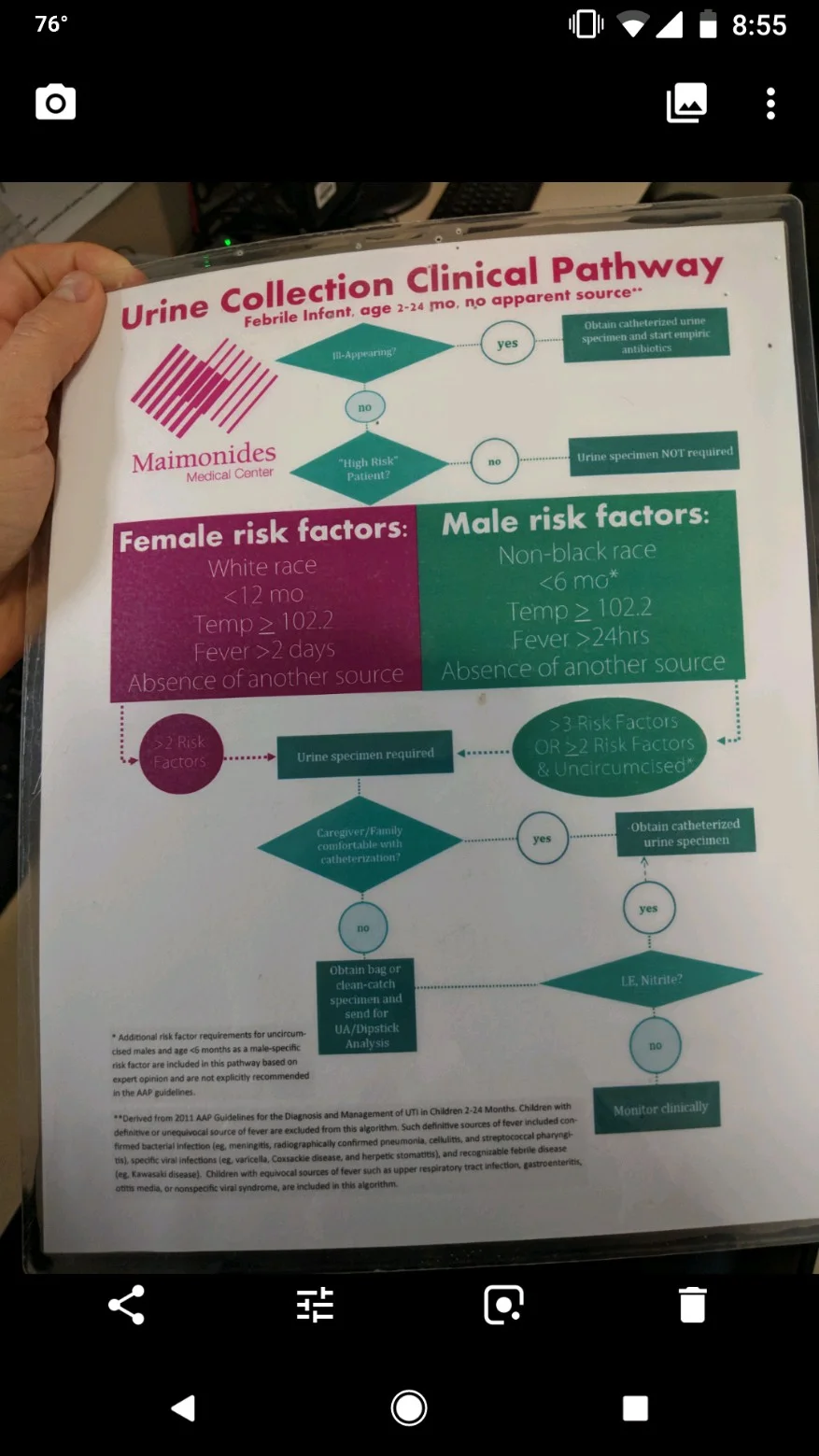
image_1545089748120.png


RSV/Bronchiolitis: Usually < 2 years old. Supportive care, often HFNC. Babies < 6 months are high risk and give good return precautions if child is well enough to go home.


Influenza: keep in mind children < 5 are all high risk, but children < 2 are at greatest risk. 

Treat with oseltamivir, even if after 48 hours for high-risk patients (young, immunosuppressed, asthmatic, renal disease, DM, neuromuscular disease, pregnant, long term care facilities). 

Oseltamivir dosing is BID for 5 days: <1 year old: 3 mg/kg. >1 year old and 15 kg or less: 30 mg. 

15-23 kg: 45 mg.  23-40 kg: 60 mg. > 40 kg: 75 mg.


Group A Strep Throat: Under 3 years old, do not develop Rheumatic heart disease so often do not require antibiotic treatments

Treatment: Low dose Amoxicillin. 45 mg/kg divided into 2 doses. 


Pyogenic Joint Infection: Most common age group is < 3 years old. 

Pathogen: Staph aureus is the most common pathogen and often with preceding trauma or URI

Treatment: Need ortho consult and include MRSA antibiotic coverage

References:

https://www.chop.edu/clinical-pathway/febrile-infant-emergent-evaluation-clinical-pathway

Harriet Lane - the whole book is a reference gem, but looked up each topic
 · 

Don't be Rash about Deadly Rashes

So, let's talk about why you went into Emergency Medicine - to talk about rashes, of course! Although you might not always (or rarely?!?) know the exact etiology of the rash, there are some Can't-Miss life threatening rashes that we must be able to recognize in the ED. And rashes account for 5% of all ED visits, so you should be diligent to identify these dangerous diagnoses. 

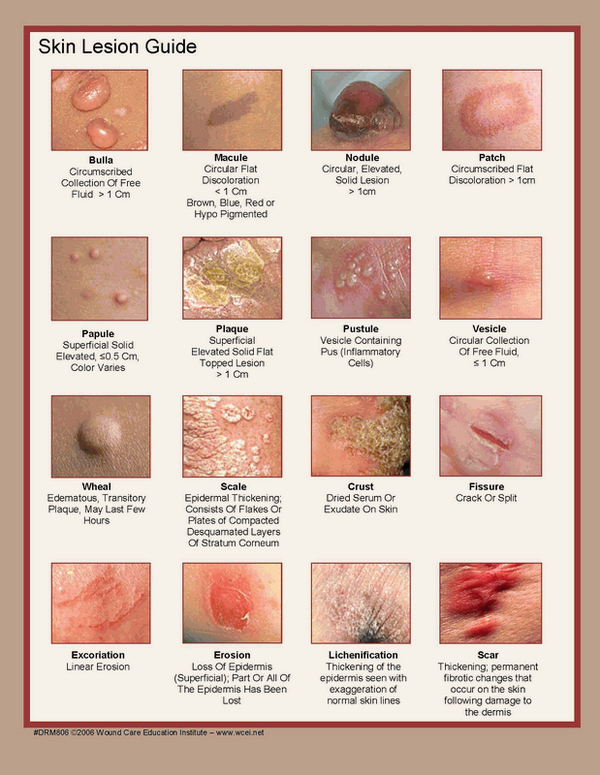
First things first: Describe the rash 

rash pics.png

Pertinent points on managing rashes: 

- STOP IT! Stop the offending agent. Known drugs that induce SJS-TEN include sulfa drugs, penicillin, barbituric acids, aspirins, pyrazolone drugs, and anticonvulsants.

- Rashes can be like a BURN, resulting in abnormal fluid balance, thermoregulation, infection control, and electrolytes. Treat appropriately!

- Treat their PAIN (Make Motov proud!) 

- Sepsis management (Make Dickman proud!). If underlying pathology is infectious, treat early and treat appropriately

- Utilize consultants, the sooner the better! Necrotizing infections - surgery. Toxic rashes - Dermatology. ICU and Burn Centers should be on board!

- Steroids??? WAIT  -  let Dermatology/Burn Center/ICU determine the disease pathology so that steroids will not be given that may cause more harm (SJS/Tens) than good. 

There's so much information, but this is just a rough guideline. Remember to rule out life threatening rashes before sending your patient home. 

You have to determine the TYPE of rash. The algorithm divides the rashes into 6 types: Maculopapular, Petechial/Purpura, Diffuse Erythematous, Non-erythematous, Vesiculo-bullous, Pustular. 

Then branch each type of the 6 rashes into the life threatening etiologies. 

erythematous.png
vesiculobulbo.png

Keep in mind that this list is not comprehensive, but a guideline to help identify life threatening rash. If the patient looks ill, be concerned. 

Once you identify a life threatening rash, be aggressive and manage appropriately (too many points to address here.) Again, just a guide to look for the DANGEROUS RASHES!. Please see the original reference article attached!

REFERENCES: 

https://www.mdedge.com/emed-journal/article/71662/dermatology/emergent-diagnosis-unknown-rash-algorithmic-approach

https://jetem.org/em_derm_tbl/

http://www.emdocs.net/dont-rash-emergency-physicians-approach-undifferentiated-lesion/

 · 

Add Adenosine to the Flush

You have a patient in SVT, failed vagal maneuvers. Time to treat with adenosine. 

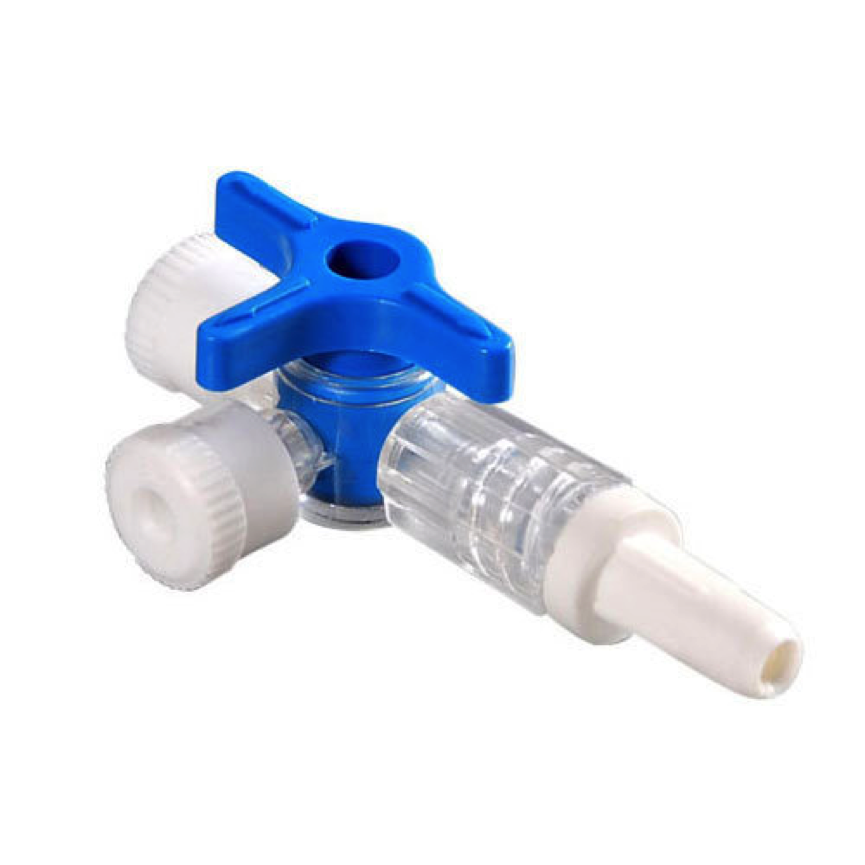
You all know this cute little three-way stop cock. Seems simple enough. That is until you need to use it... the stop and go seems somehow far more confusing than it really is.

3w.png


And the one time you MUST know how to use it is to rapidly administer adenosine. You need access in the antecubital or proximal upper extremity.

Why the rush? Adenosine is rapidly metabolized by erythrocytes and vascular endothelial cells - so with its 10 second half-life, we have to administer and flush it quickly so it can reach the heart. 

Surely, there has to be an easier way! Well, folks. There is!

Make sure you have your ECG rhythm strip running, zoll pads on the patient, and explain the patient that this might "feel funny"  (as their heart stops for just a wee bit). 

  • Grab a 20-mL (or 30-mL) syringe.

  • Desired dose of Adenosine (6 mg or 12 mg)

  • Draw up the adenosine AND the normal saline in the same 20-mL syringe.

  • Administer via fast IV push

That's it! 

Adenosine is safe and maintains its effectiveness mixed with normal saline. One study even used OI access for conversion of SVT in an infant. 

Only have central access (hemodialysis port, central line)??? Per 2010 ACLS guidelines drop the dosing: 

  • 1st dose: 3 mg (instead of 6)

  • 2nd/3rd doses: 6 mg (instead of 12)

This lower dosing minimized risks of prolonged bradycardia. ALSO - use this lower dosing if the patient is taking dipyridamole or carbamazepine as these two medications potentiate the effects of adenosine.


REFERENCES:

J Korean Soc Emerg Med. 2003 Aug;14(3):224-227 

https://www.resus.com.au/2015/03/26/a-new-way-to-give-adenosine-in-svt/

https://www.aliem.com/2012/12/trick-of-trade-combine-adenosine-and/
Weberding NT, et al. Adenosine Administration With Stopcock Technique Delivers Lower-Than-Intended Drug Doses. Ann Emerg Med 2018;71(2):220-4.

https://acls-algorithms.com/acls-drugs/acls-and-adenosine/comment-page-2/

 ·